
Giving the Simple Gift of Light #9
You might think that crafting lighting designs for hundreds of homes would get boring after a few years. How many ways can you light a kitchen before it all starts to blend together?
As it turns out, thankfully, the answer is “to infinity, and beyond!”
Creativity is tough to define, but in lighting design I think creative solutions are simple to produce: define a problem, then find a solution using the various parts and pieces of our trade. Reframing the question, or defining the problem, is a critical first step. If soft light bouncing off the ceiling is what you want in the Comfort Zone, you could do a ceiling cove. No cove? No problem. What else could you use?
To wrap up the Living Room Series, let’s stroll through the photo album and see what our team has done to keep each home creatively unique.
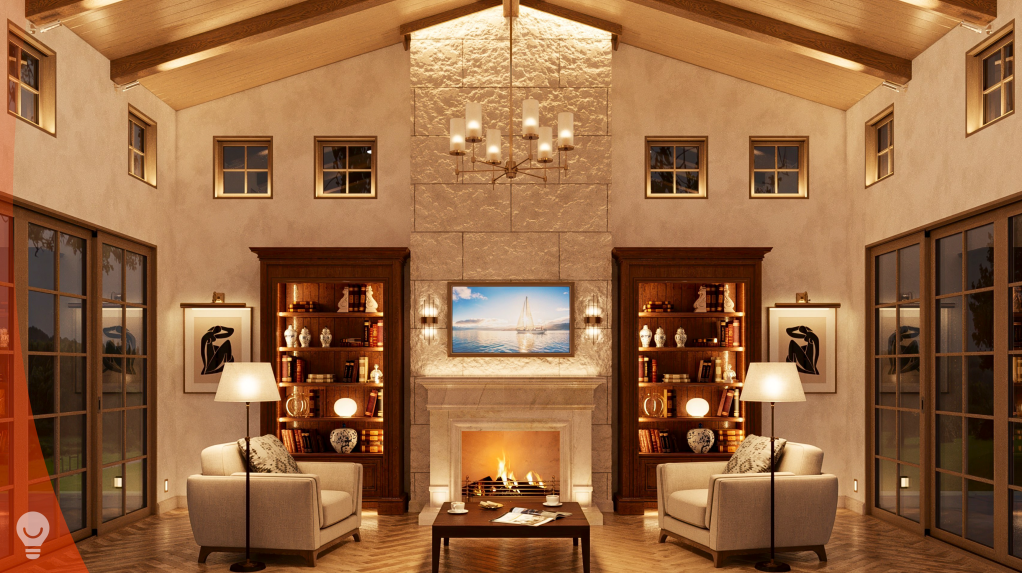
First, it makes sense to look at a more-or-less “ideal” living room. There are a lot of solutions in this single rendering – that was the point – but they all add together to make a beautiful, functional, and comfortable space.
- The Comfort Zone is gently illuminated with soft-shaded floor lamps, art lighting, wall sconces, windowsill uplights, shelf lighting, and grazing on the fireplace. Most of the lighting in this zone reflects off something: beams, walls, art, stone, ceilings. That makes it very comfortable, without being dark.
- The Work Zone has what it needs from the floor lamps, as is evidenced by the strong glow on each chair.
- The Glare Zone has no visible bright recessed downlights and the chandelier is dimmed to just a soft glow. Light is reflected off the ceiling, but nothing points directly at the room’s occupied spaces.
- The Safety Zone has a few recessed step/path lights and light in the built-in toe kicks. A little light under the coffee table would also be awesome, but wiring it gets tricky without drilling through the beautiful floor, so we left it out.
Now let’s get creative.
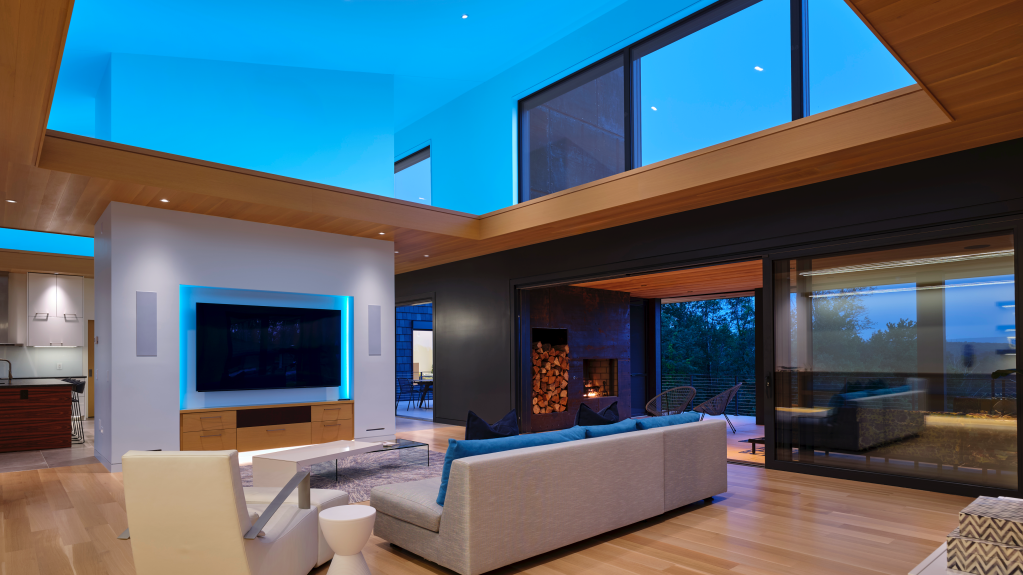
Tuck linear LED strips in behind a television and a soft glow slips out around the set, softening the contrast between the television and the typically darker walls. Here, the light is tucked into purpose-built pockets in the wall, keeping the television free of lighting gear. TV halos like this can be controversial, with both advocates and detractors vociferously arguing their points, but it really just comes down to whether a homeowner likes the look or not. Halos might ease eyestrain and look cool, but a little soft indirect light in a space can be valuable in just about any form.
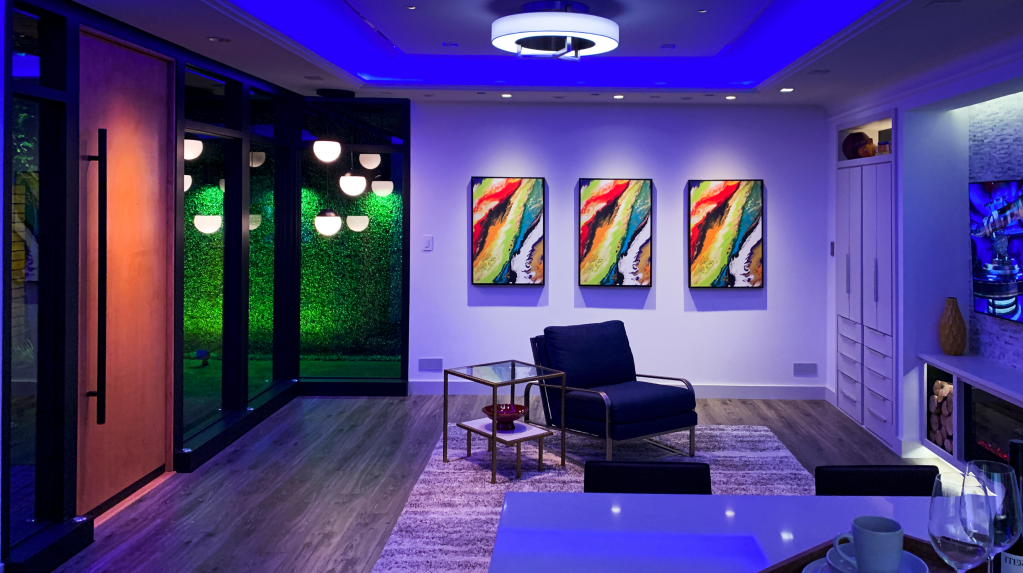
This photograph and the previous both make use of saturated color, another solution that regularly scares our clients. There are some who don’t mind the Las Vegas vibe of dancing rainbows of color, but most of us do not feel a need for party lights. We do like sunsets and magic hour, however, and bringing some of that natural color- like blue skies or amber sunsets- can help us relax and feel comfortable. Dimming is great; adding a little nighttime color takes it one step further.
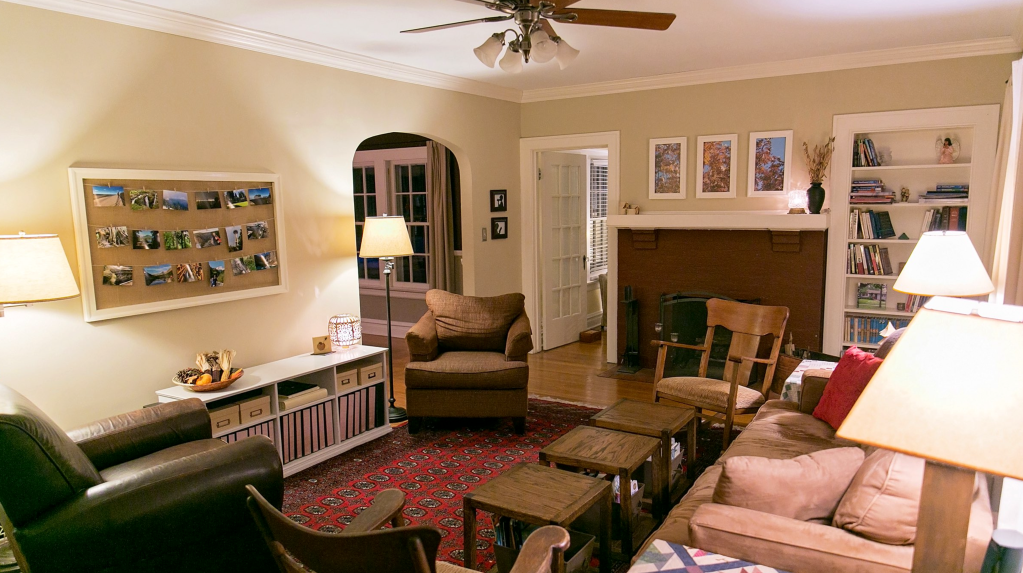
Lighting can get expensive quickly, but a little thrift-store searching or creative upcycling can have a positive impact for just a few dollars. In this simple living room, two accent lamps add sparkle and glow to the Comfort Zone: one on the fireplace mantel and another to the left of the brown chair in the middle of the photo. Both were originally ceiling lighting fixtures that were being thrown out of a family member’s house; adding a cord and plug gave them new life.
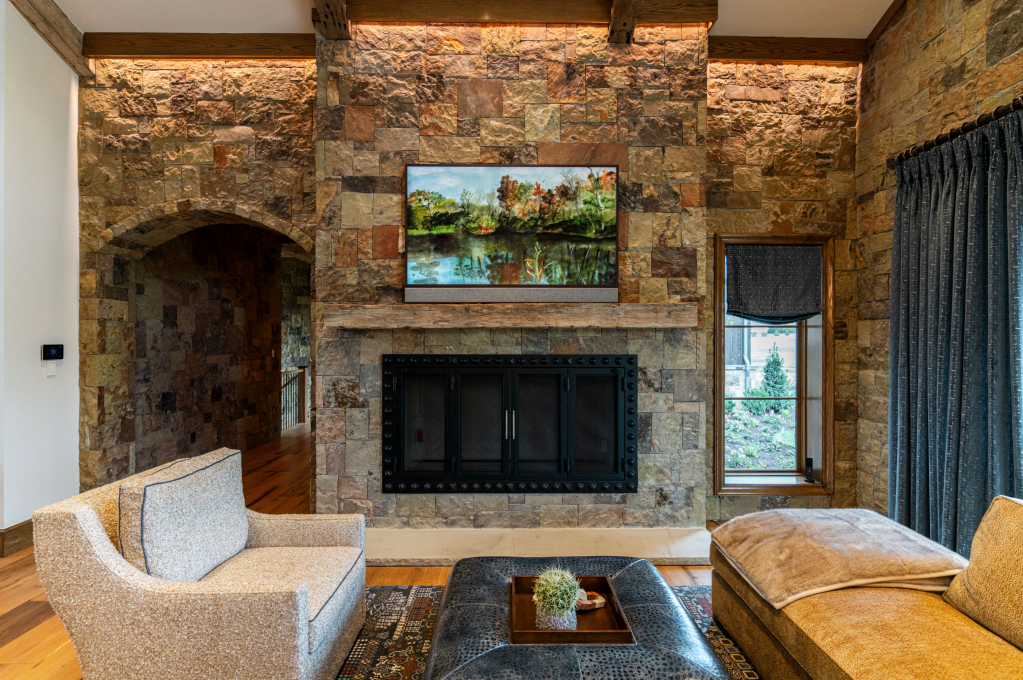
A sure-fire way to spark creativity while making trade partners happy: light the important stuff in the room. Here, the beautiful stone work has light grazing downwards from a shielding wooden valance. The result is a soft glow that calls our attention to the rough stone. The homeowners invested real money in the stone, why not highlight it?
Shown in the rendering at the beginning of this post, linear LED strips along windowsills of clerestory windows is a subtle way to introduce indirect light into a space. In this living room, there is a soft glow at the base of each window and a very soft, diffuse glow on the ceiling as a result. Both chase away the shadows that would otherwise make the upper half of this room feel dark.
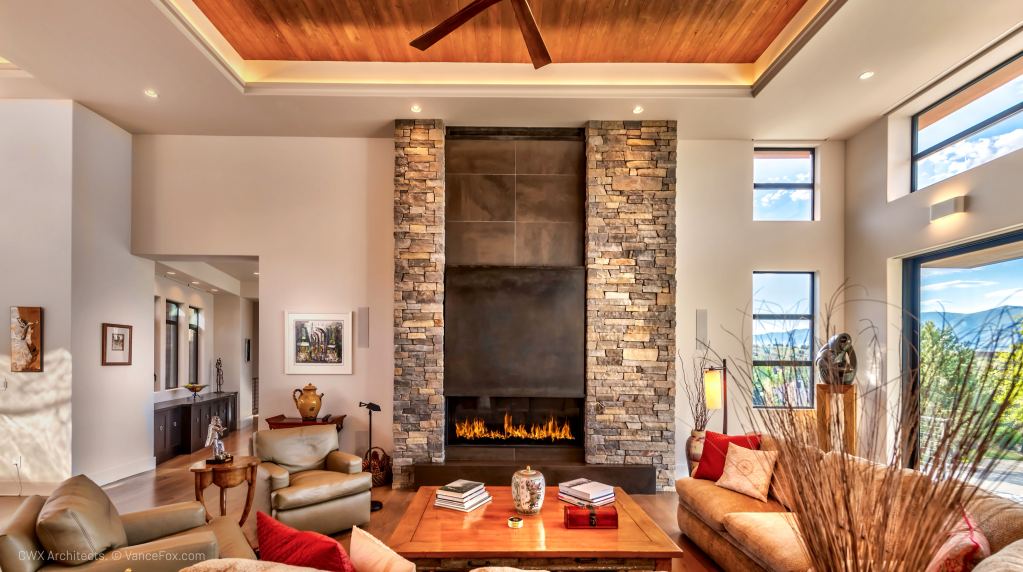
Sometimes a cove light is not possible and window coverings might interfere with the previous solution. In this project, our designers added wall sconces above the patio doors to push light down to the floor (while staying out of the Glare Zone) and to push light upwards into the Comfort Zone.
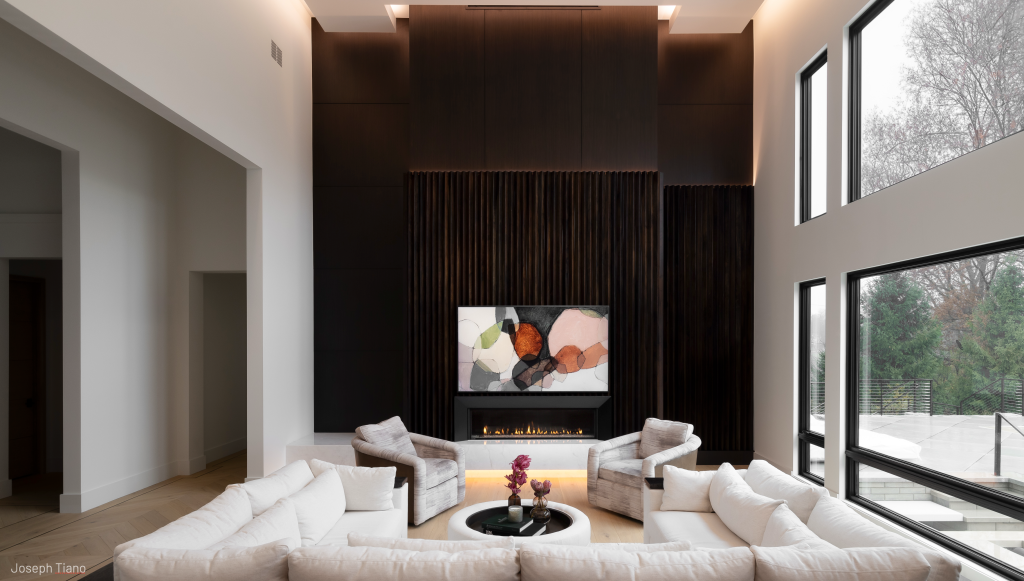
Light in this space is very muted by the daylight flooding in, but you can just make out a linear glow above and to the right of the fireplace where the fluted material steps back to dark wooden panels. This approach helps the interior design treatment look its best while introducing indirect light into the space.
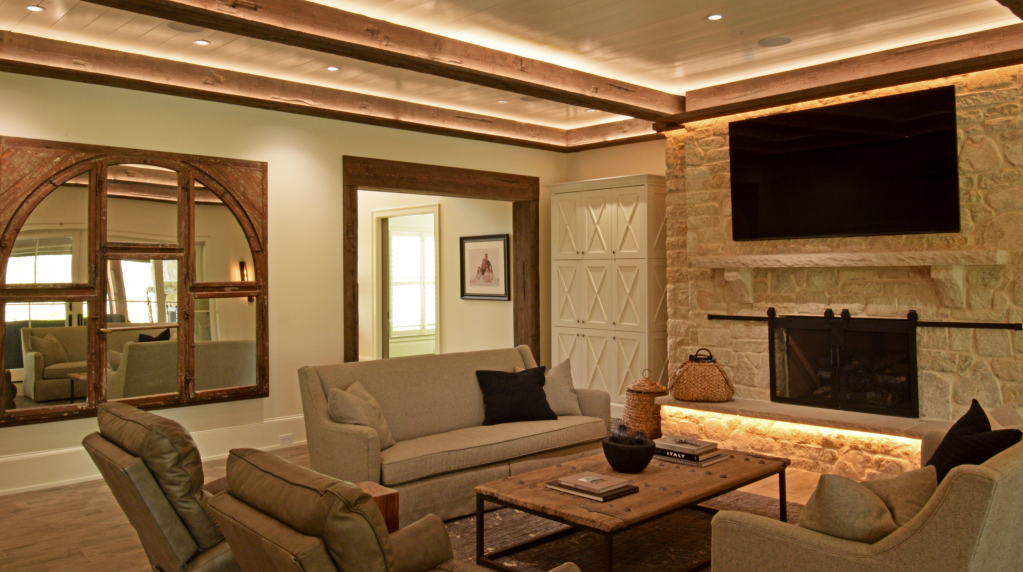
Adding a tiny shelf to the bottom of ceiling beams creates an opportunity for linear highlighting. Without the strips, the character of the wood would be almost certainly lost. How do I know? Look at the door frame in the middle of the photo and compare to the beams. We see a lot more detail overhead than we do in the doorway, despite the same wood being used.
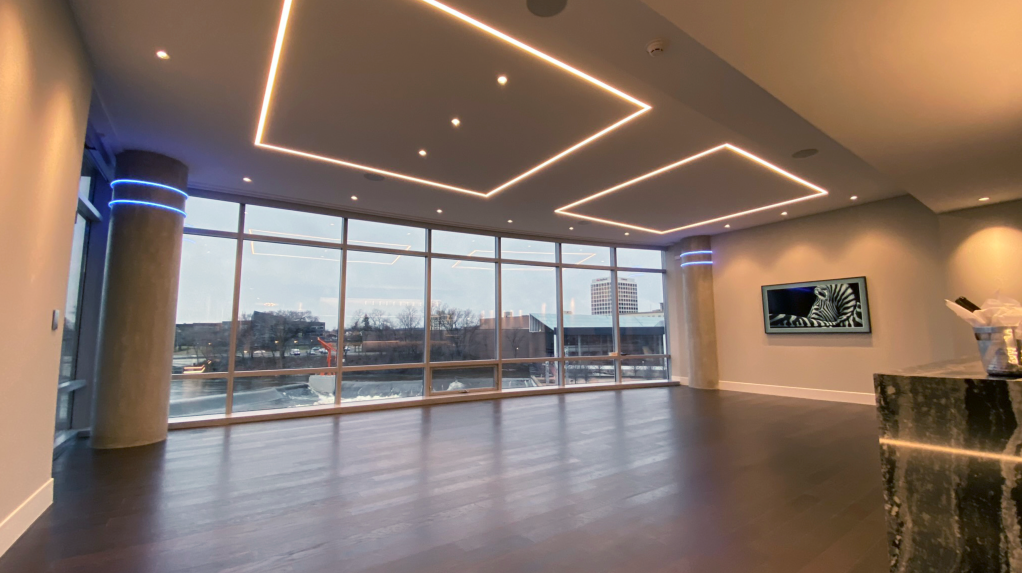
This modern condominium has an open floor plan with a dining area on the left and living area on the right. The lines of light in the ceiling are a bit like area rugs in defining each separate area. Be careful not to rely on these for significant illumination; super bright lines of light can introduce intense glare. Dimmed, however, they make a very nice glow.
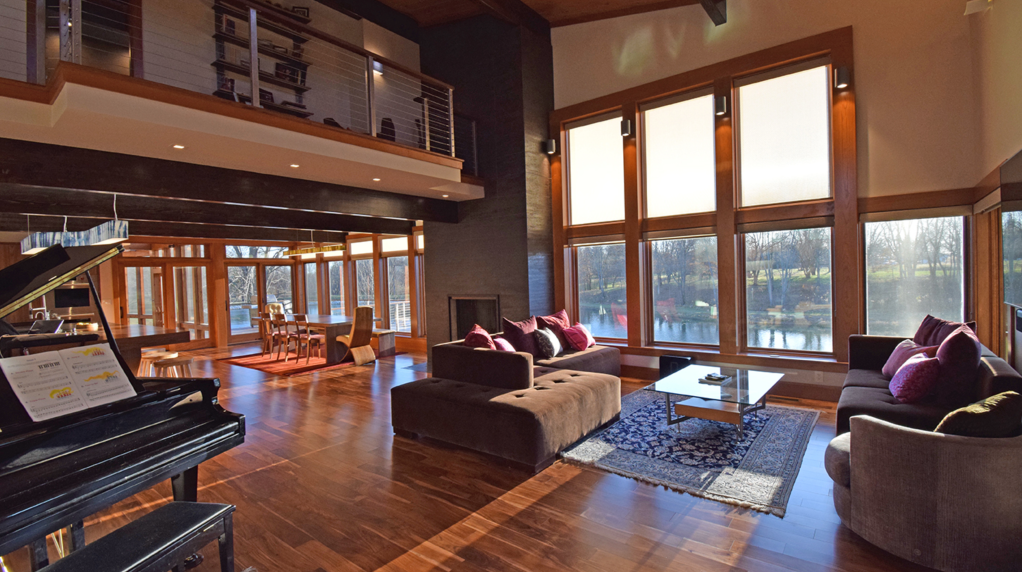
I like to mount wall sconces to wide window mullions as shown in this photo, but these days I would locate them at the cross members and use fixtures that go up and down (see the last image). Wood reflects light beautifully and just plain looks better with a little warm light. This approach can also reduce the contrast between the brightness of the window and the darker walls and trim, making it easier on our eyes.
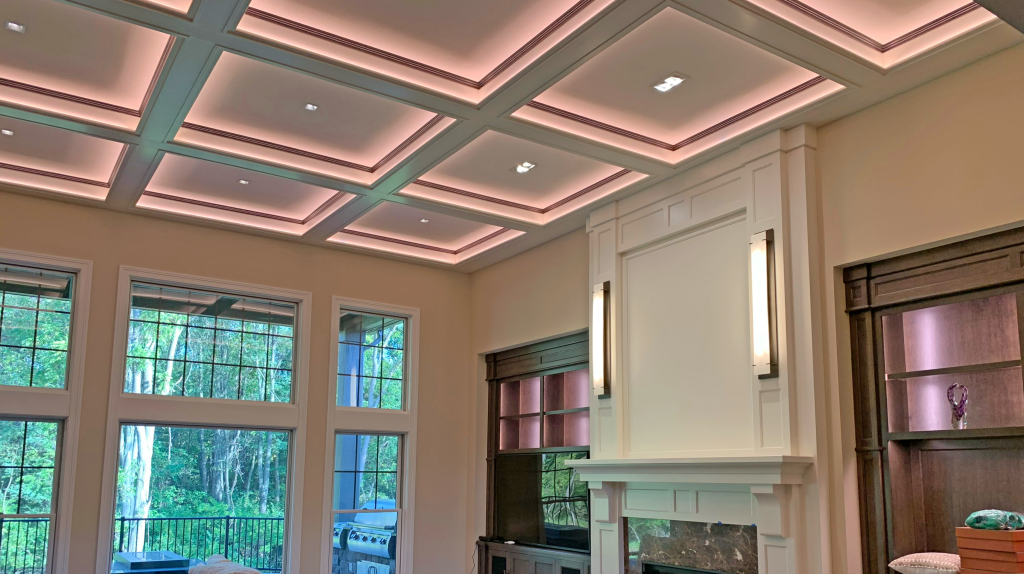
Coffered ceilings can be quite stunning when illuminated. This is costly and time-consuming to install, but nothing calls attention to detail like light. These coffers will also fill the entire room with soft, glare-free light, reducing the reliance on the recessed downlights and increasing comfort.
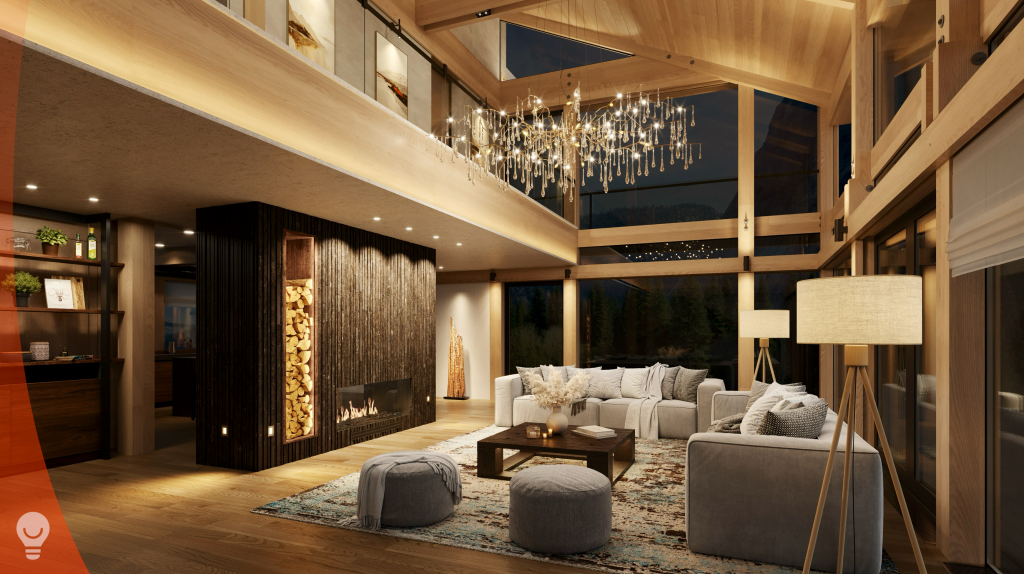
There is no end to opportunities, and we packed a good number of them into this rendering. Notice the up/down sconces on the wooden columns, the light below the coffee table, step/path lights, highlights in the firewood storage, and linear along the bottom of the long wooden beam that holds up the balcony. How many different lighting “layers” can you count in this photo? I count 15.
Is this list exhaustive? Absolutely not. I could go on for hours.
And is there a right and wrong creative solution to choose? Yes…and no. Each room is unique, each client is unique, and that means every solution can be unique.
That’s what makes our job fun!
Read more of the Giving the Simple Gift of Light, a practical how-to series, HERE.