
Giving the Simple Gift of Light #5
“Yes, but…”
Back when I was a teenager, my dad regularly teased me by saying, before I could, “yes, but….” Apparently, I had developed quite the habit of contradicting him, so he went on the offensive. Of course, as a fifteen-year-old, I did have all the answers to life’s most difficult questions (yes, I am being sarcastic).
So it serves me right if you went through the Pick the Places and Pick the Products posts for kitchens, started on your own plan, and then turned back to me to say “yes, but….”
One of the aspects of residential lighting design I enjoy the most is that every project is unique in one form or another. Sure, there are different architectural styles and finishes and sizes, but there are also different desires from the future residents. Mix it all together and you have a profession somewhat immune to boredom.
This dynamic reality means that everything I put into the Pick the Places and Pick the Products posts may fall short of delivering what you need- and there really is no feasible way for me to write out the solution to every situation, most of which I have yet to encounter.
So for the final (I think) post in the Kitchen sequence, I thought I would string together a few examples of how creativity might bring about solutions not previously mentioned. You may still end up asking me “yes, but…” but I will have tried my best.
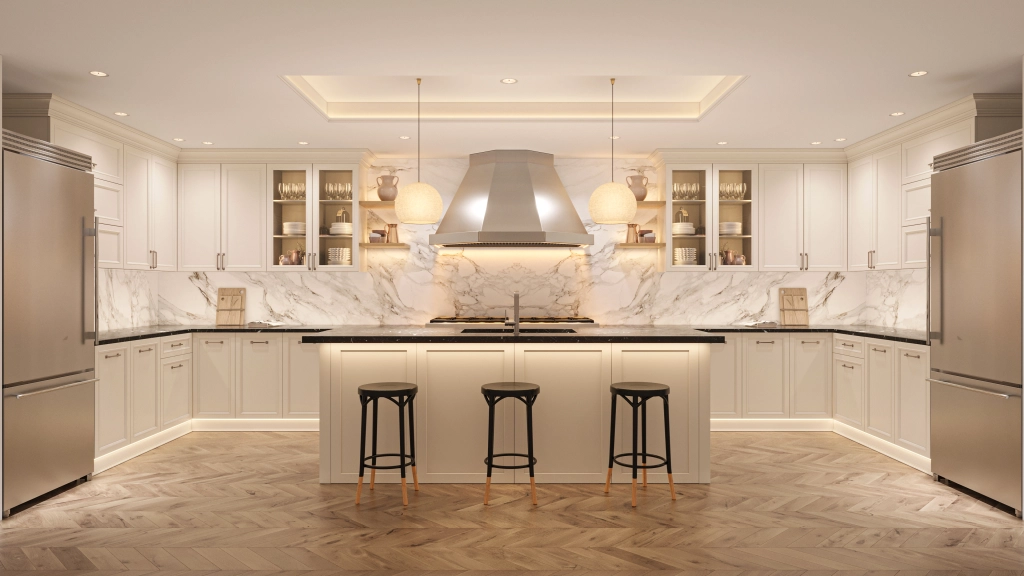
Before we dig into anomalies, it makes sense to look back to a rendering we developed specifically to catalog the “normal” recommended approach to kitchen lighting. Even though my theory and language have developed a bit since this was made, the results are the same: a comfortable, inviting, functional, and beautiful space. If you followed the Pick the Places and Pick the Products steps, your kitchen could look a lot like this. A few things to note:
- The work zone is well illuminated with linear undercabinet countertop lighting, pendants with a downward component, and additional downlights over the island.
- The comfort zone is softly illuminated with light bouncing off the cabinet fronts, concealed light coming from the shelves, soft light bouncing off the ceiling cove, and through the fabric sides of the pendants.
- The glare zone is protected from the worst offenders by pushing recessed fixtures to the perimeter and limiting bright overhead sources.
- The safety zone is carefully lit with toe-kick lighting and under-bar lighting.
Now let’s get creative.
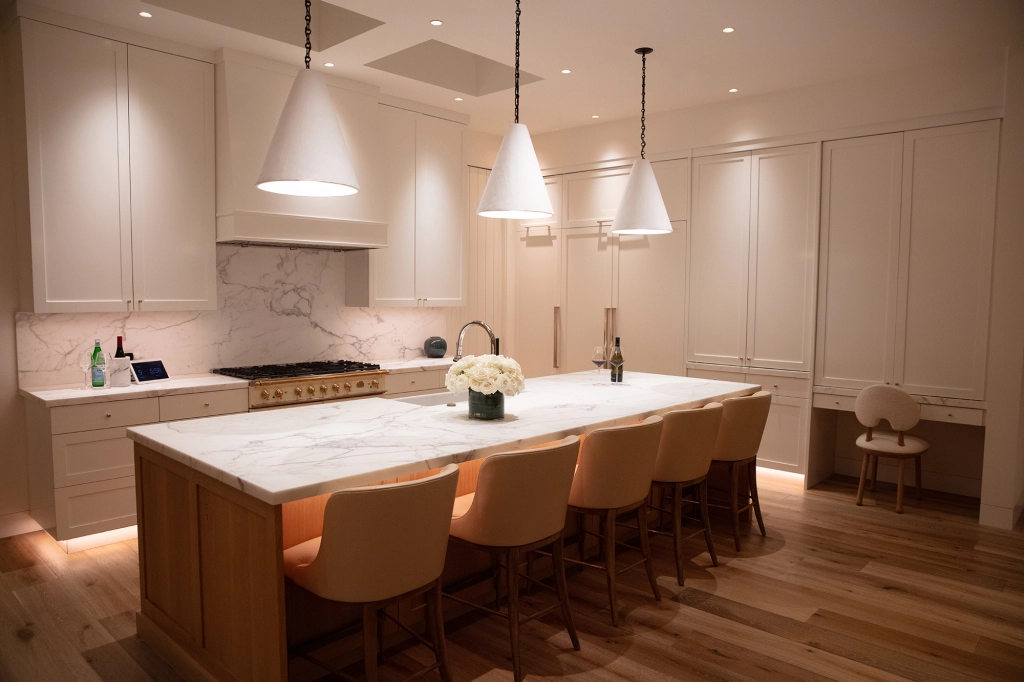
The interior designer on this project chose lovely pendants with a solid shade that blocks light from emitting sideways, where we need soft light for the faces of those standing around us. The pendants do a better job than most sending light downwards towards the countertops, but more was needed. Jessica Doyle, one of our talented Senior Designers, added a double row of downlights that push light to the island top and also softly illuminate the outsides of the pendant shades, resulting in a nicely balanced look.
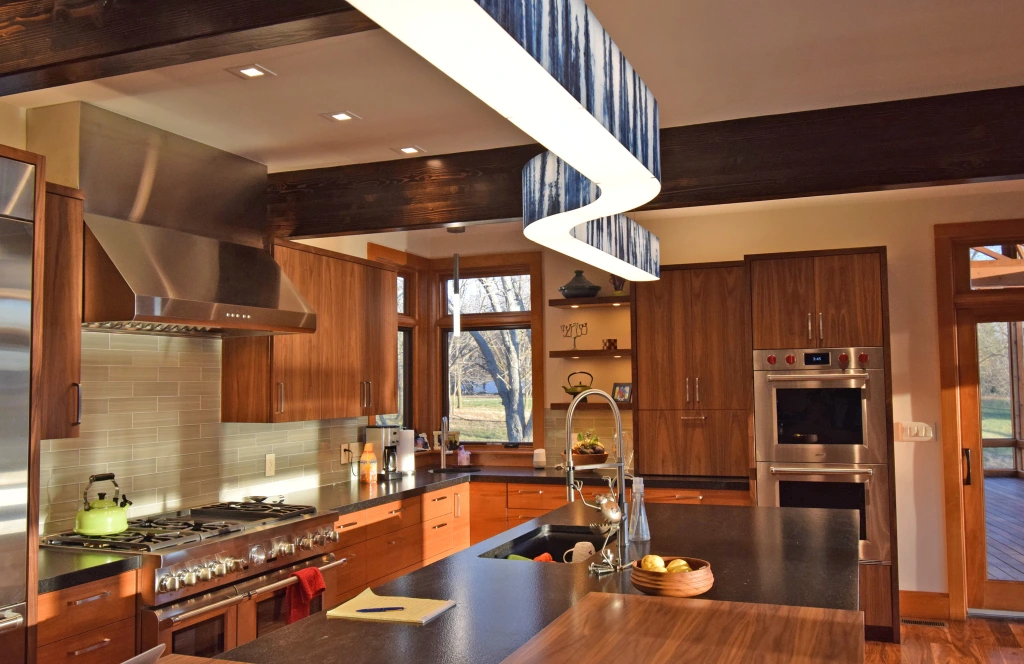
Most linear pendants – like most pendants – look better than they light. A select few linear pendants, like the one shown here, emit soft light in all directions. This can do a better job of gently illuminating a kitchen island than the trendy narrow strips of harsh bright light.
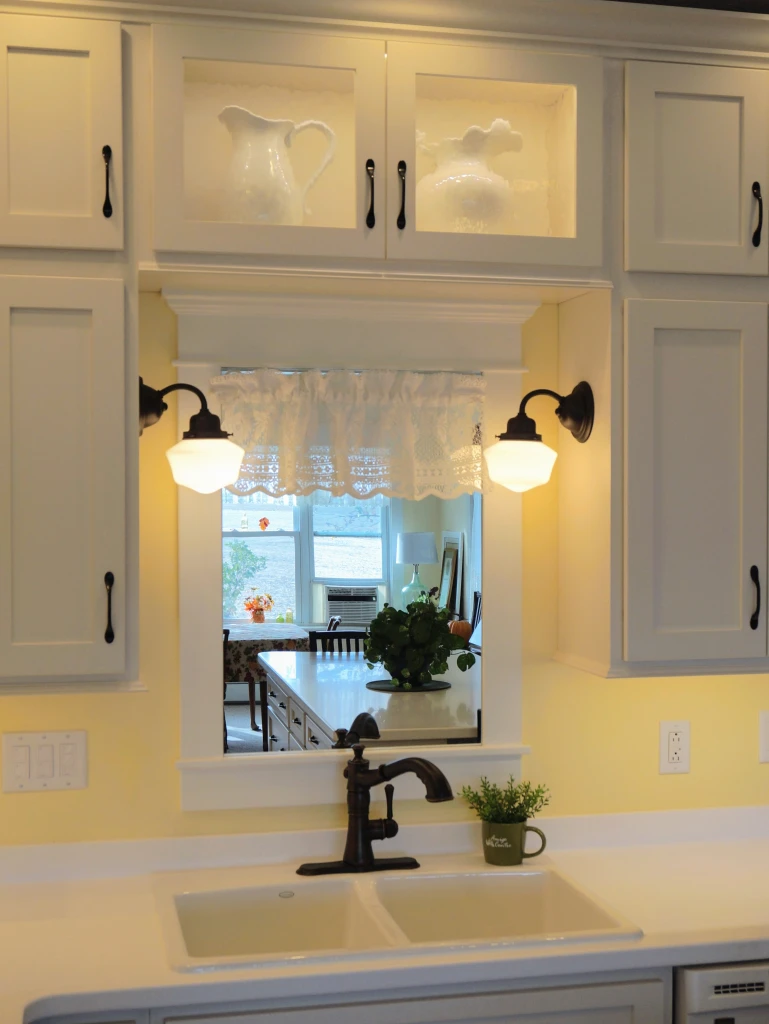
When a friend shared their worry about a kitchen sink with no window, we added a pair of decorative sconces to brighten up the space comfortably. Paired with a mirror, the sink no longer feels trapped and dreary.
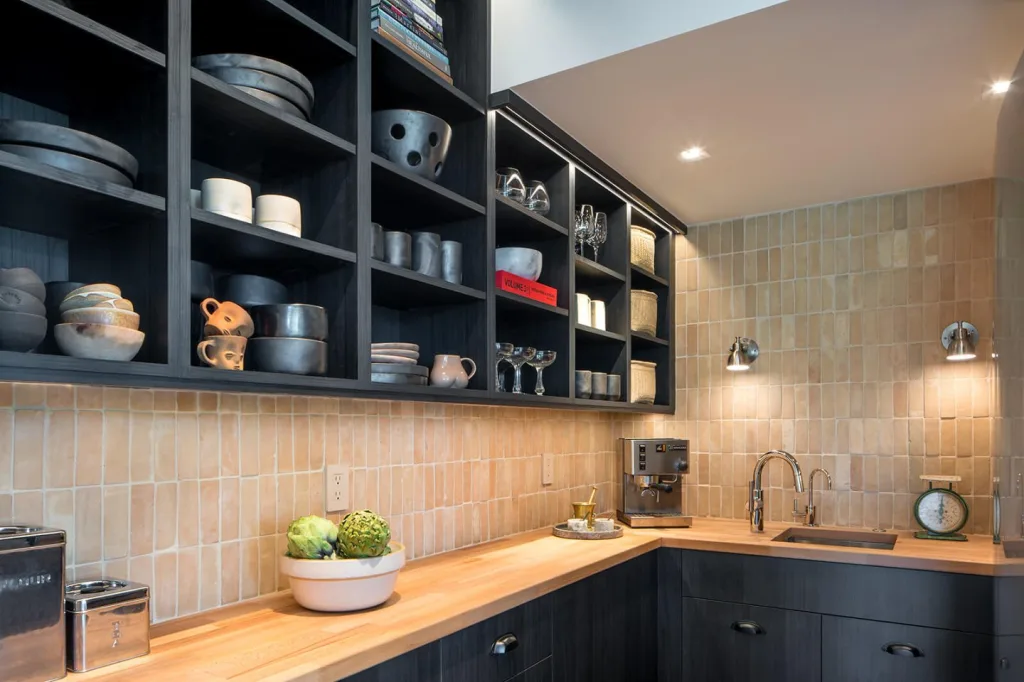
Downward-facing shielded wall sconces like these can do a very good job lighting up countertops and sink areas where there are no overhead cabinets or shelves, like in this pantry in a Colorado home. (Photo credit to Agave Island View)
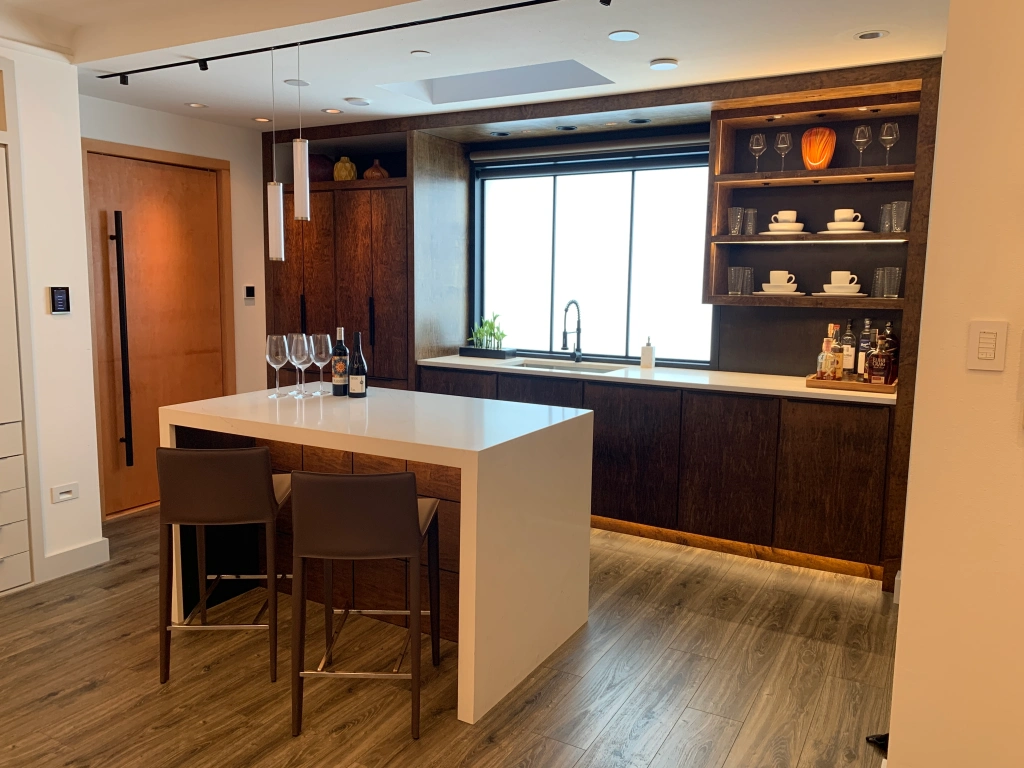
The sleek lines of this showroom kitchen were perfect for a linear slot above the island. Basically track light recessed into the ceiling, the slot conceals tiny downlights that push light to the countertop and serve as a flexible mounting point for decorative pendants. Note the pendants pushed to one side of the island; this approach keeps views clear while preserving the design aesthetic of the modern pendant.
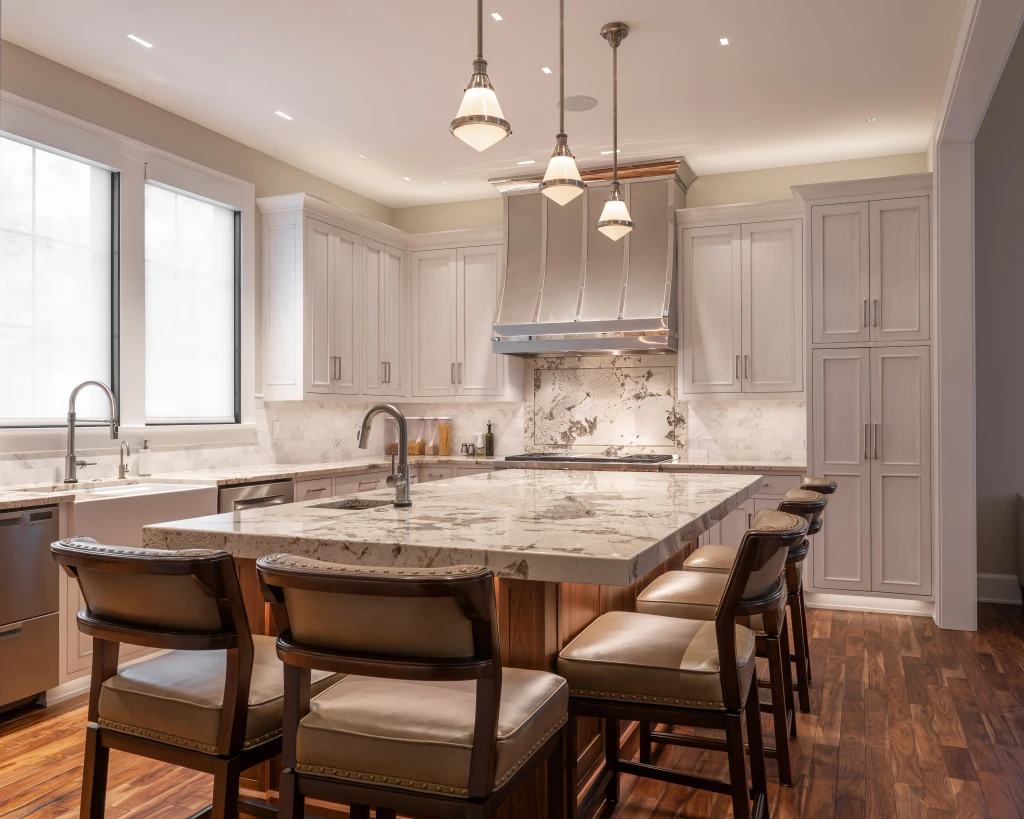
Recessed lighting need not be round; in this kitchen our team used tiny micro-multiples, each about the size of a fun-size candy bar. They push light downwards quite effectively while keeping the ceiling surprisingly clean.
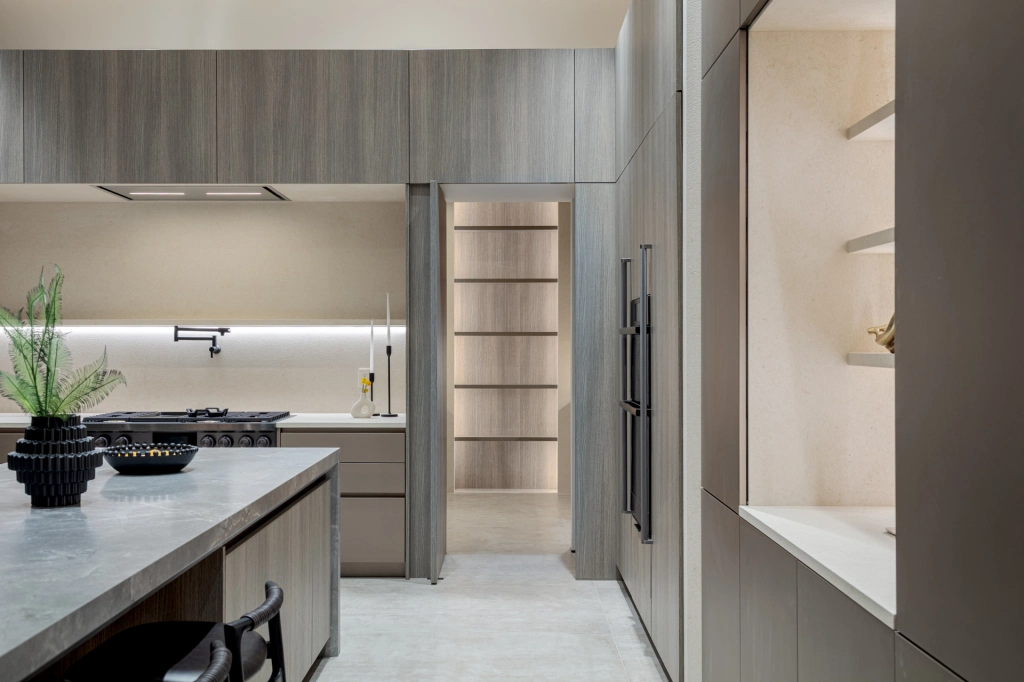
Embedding a strip of light into a floating spice shelf above the cooktop brought functional light down below eye level, delivering better light with less glare in this modern kitchen designed by Senior Designer Kelli Hernandez. (Photo credit to VistaSerenaShowhouse.com)
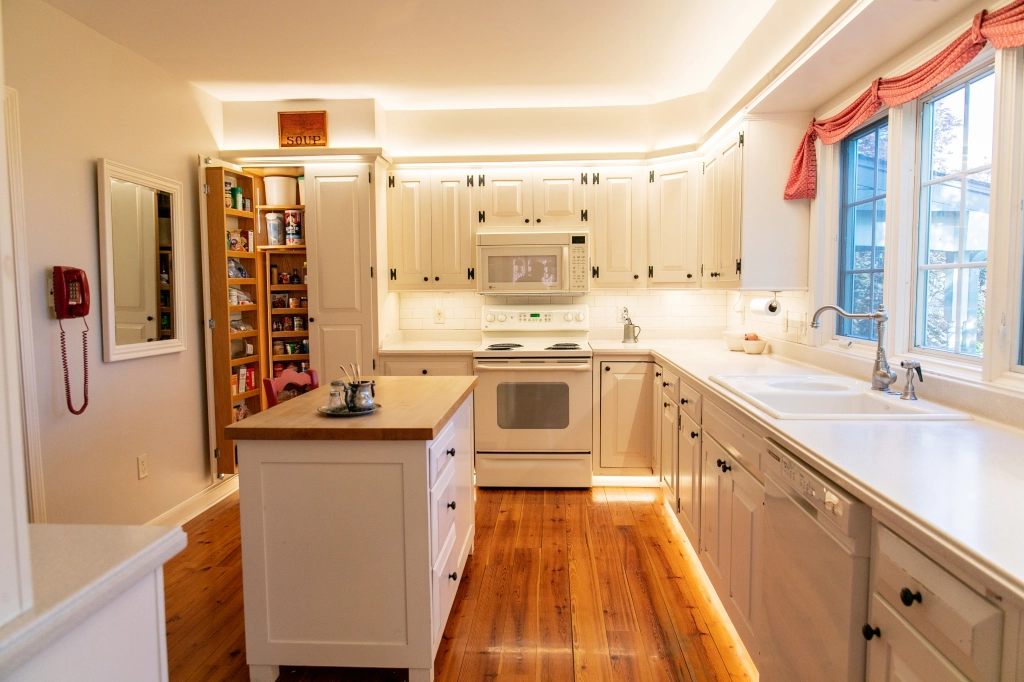
We experimented with linear lighting in this modest, traditional farmhouse kitchen, completely eliminating the need for recessed downlighting. Note the strong glow on the cabinet fronts, the well-lit countertops, and the indirect cove light concealed by trim. Even the pantry has linear lighting running vertically inside the face frame.
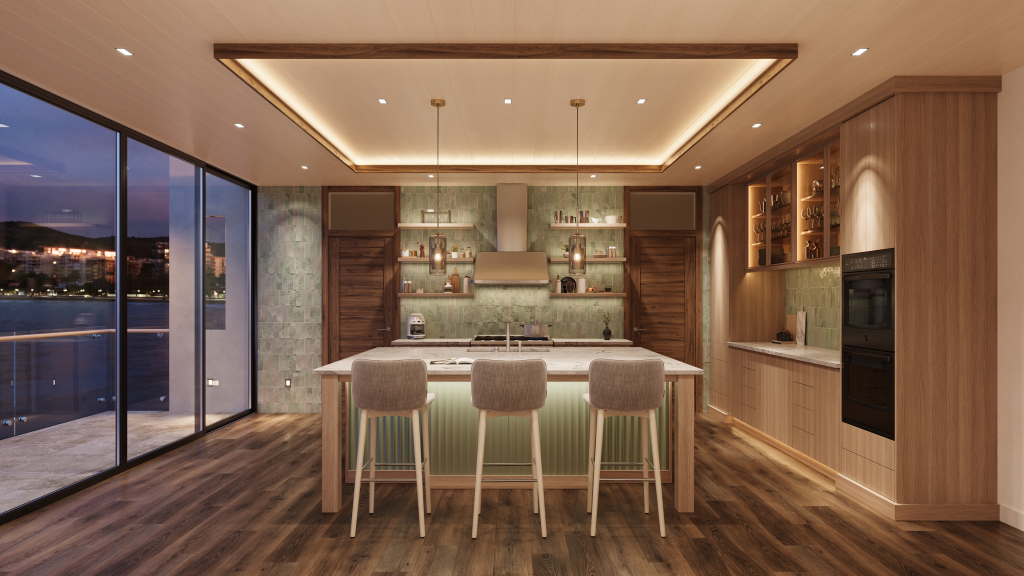
No cove? No problem. We sometimes use a built-up cove added to a flat ceiling to bring soft indirect light into otherwise plain kitchens, as shown in this concept rendering. It also makes a great design element, like putting a carpet underneath a seating area to draw focus and create boundaries.
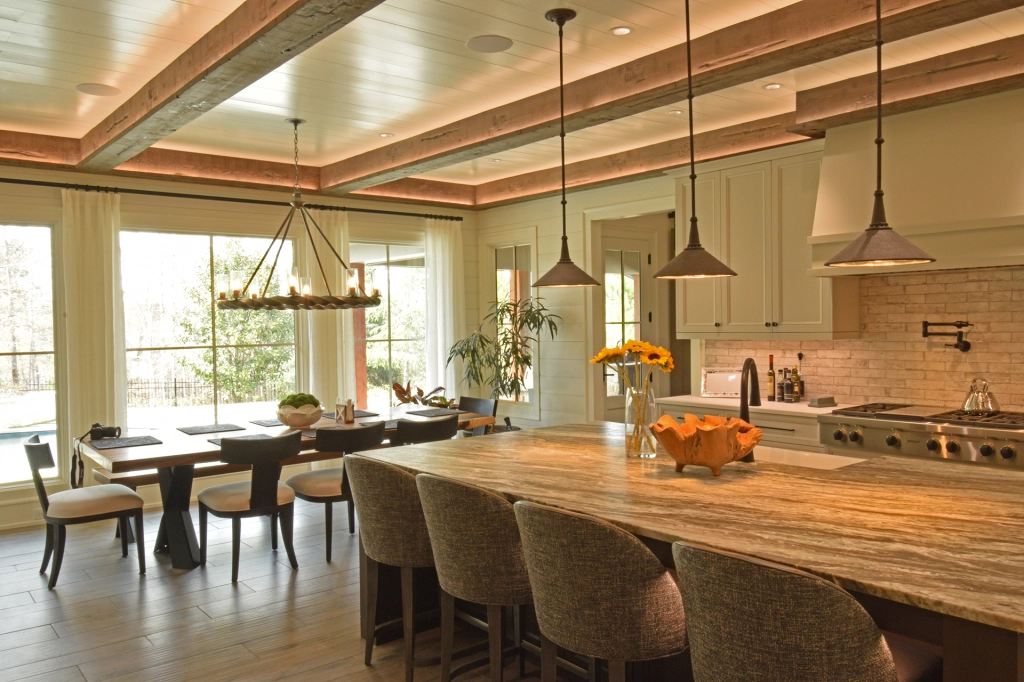
There is more than one way to light a ceiling, as this kitchen illustrates. We added tiny strips of light to each side of the beam, at the bottom, to direct light upwards onto the tongue-and-groove ceiling. The result is glare-free, shadow-free illumination throughout.
Got your creative juices flowing? Our team designs over 100 kitchens per year, and this is just a fraction of the solutions developed to satisfy clients (and, to be honest, to satisfy our own desire for something unique). There is no way to list all the options here…and that is part of what makes lighting fun!
Read more of the Giving the Simple Gift of Light, a practical series, HERE.