
The Simple Gift of Light #6
Light is an incredible gift, a powerful tool and beautiful natural phenomenon we can both use and enjoy. As I lighting design professional, I spend most of my working hours figuring out how to help people enjoy the benefits of light but seldom invest much energy (no pun intended) in helping people reap the benefits of darkness.
But to ignore the value of darkness is to put our health and wellbeing at risk.
Do you ever have trouble falling asleep? Staying asleep? Waking up?
Do you ever find yourself asking “Why am I so tired? I think I got enough sleep.”
Many of us live rather busy lives. My own life has an ebb and flow, but a typical day begins before sunrise with a workout, moves through breakfast and a shower, and settles into a full workday in front of a computer. I wrap up work, pitch in with dinner, do the dishes, walk the dog, set out clothes for the next day, and maybe grab an hour of reading or television before calling it a night.
Then I am off to bed to hopefully land around 8 hours of sleep. If I am traveling, attending a conference, leading a training event, or pushing through an intense project at work, I whittle away at my sleep until 8 hours seems like a fantasy. Thankfully, that’s usually only one week a month or so.
Once I turn out the lights, if I am lucky, my body will not only fall asleep but will also cycle through deep sleep, a unique phase of rest where our body can discover some of the greatest treasures of rejuvenation.
If I am unlucky, my body will skip through the night between shallow sleep and REM (rapid eye movement) sleep, never dipping into the deep darkness my body needs to feel its best the next day. Pile up too many such nights and the consequences can be devastating. They need not be.
Much of the discussion of light’s impact on human health centers on two key factors: getting enough light in the first half of the day and not getting too much light in the latter half.
We need good bright light during the day to move with energy and think brilliantly, and that same strong light regulates hormones in our body that help us sleep better at night. But when the sun goes down, that same bright light can disrupt our sleep by upsetting our circadian rhythm, or our synchronization with natural light and the earth’s rotation.
A few years ago I was scrolling headlines and came across one that read “Sleeping with even a little bit of light isn’t good for your health, study shows.” I had to click, of course.
I read the article and clicked through the abstract of the research study which read, in part: “Circadian misalignment caused by chronic ALAN [Artificial Light At Night] exposure may have negative effects on the psychological, cardiovascular and/or metabolic functions.”
Ouch. My brain, my heart, and my metabolism might be negatively affected by too much light at night? This was not a surprise to me, as there are many research studies that reach similar conclusions. What was unique and memorable was that these negative effects could be from sleeping with just a little bit of light at night.
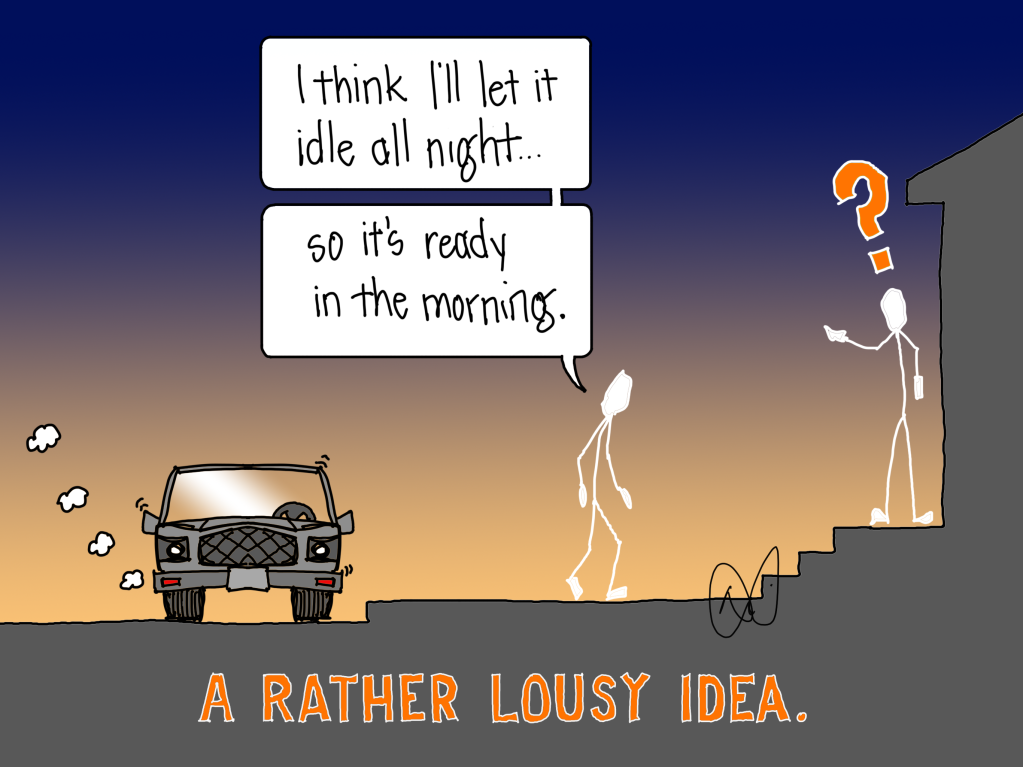
Why is this a problem? Without beneficial darkness, our brains end up idling all night. We know this would be a bad idea with an automobile: besides the pollution and fuel costs, running our automobiles without rest would significantly shorten their useful life.
Running our brains without rest could significantly shorten its useful life.
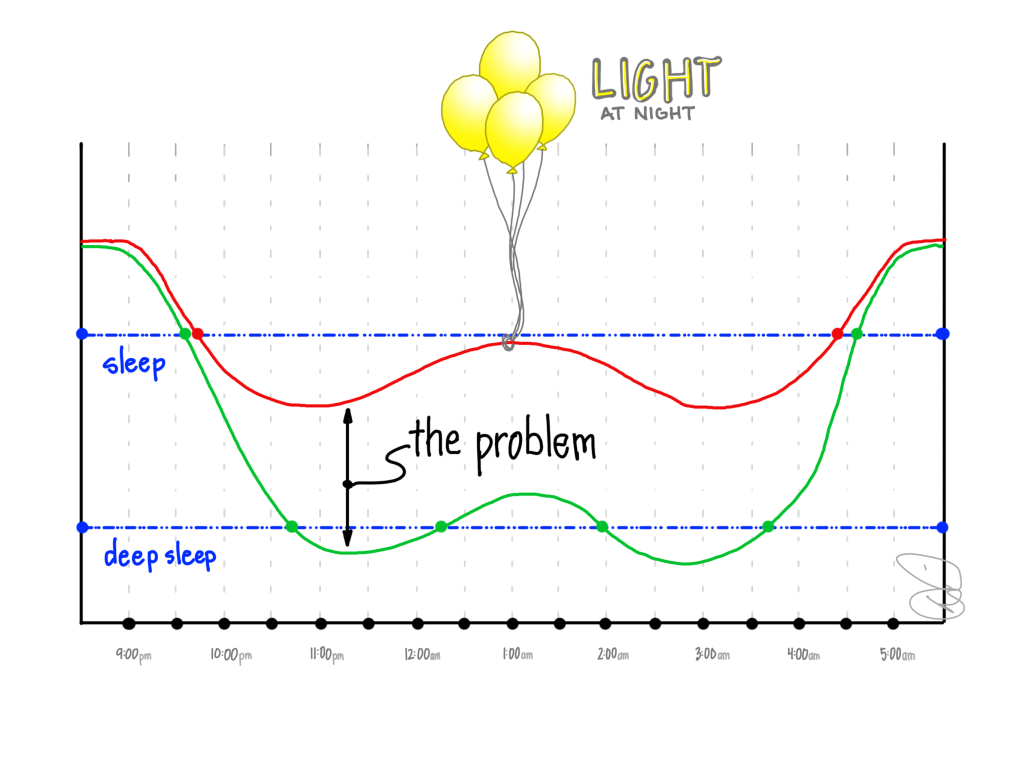
It’s time for another not-so-scientific graph. I am not a researcher, just a lighting designer trying to make sense of the science and boil it down to actionable advice. As I see it, the problem is that ALAN, an acronym for artificial light at night, essentially lifts our consciousness and prevents our brains and bodies from moving into deep sleep.
Time for a self-audit. Tonight, go into your bedroom after dark and turn off all the lights and shut the curtains or blinds as if you were going to bed. Let your eyes adjust for a minute or two. Can you see to move around without stubbing your toes?
Count the sources of light you can find in the dark. Is there an LED on a smoke detector? Do you have alarm clocks that glow? Is there a red light on a television? Is there a nightlight by the door? Do streetlights and neighborhood sky glow creep in through cracks in the blinds or around curtains? Does your phone glow whenever it shares a notification?
If you answered yes to any of these questions, you may be getting enough sleep but never going down enough to qualify as deep sleep. And this is a problem.
Our deepest sleep phase is packed with benefits produced by our slowest heartrate, lowest brain activity, and deepest breathing. It is a state of profound rest that rejuvenates in ways that shallow and REM sleep cannot. If we sleep with too much light at night, we lose these benefits and risk some serious negative effects.
The study mentioned above placed one group of participants into sleep rooms with a little bit of light and a second group into rooms with complete darkness. The next day, both groups reported sleeping equally well, despite one group exhibiting elevated heart rates and blood sugar regulation delays. You can probably guess which group exhibited the negative effects. Now imagine doing this to your body every single night.
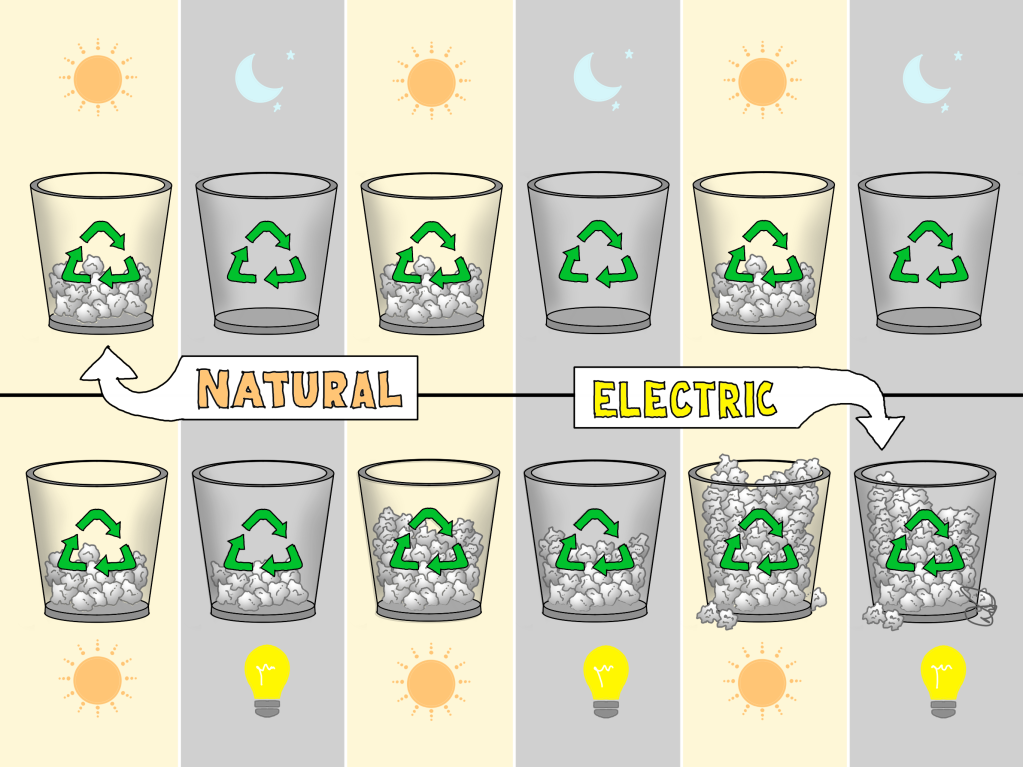
There is another line of research focused on potential connections between memory issues, Alzheimer’s, lighting at night, and rest. Our deep sleep phase is kind of like a nightly emptying of our brain’s recycling bin. Imagine someplace like Walt Disney World, where each morning begins with empty trash and recycling cans. Over the course of the day, thousands of visitors fill up those bins.
Over the course of your day today, your brain will accumulate compounds, like plaques, that are akin to garbage.
At Disney World, workers will come through at night, empty the cans, and wash the streets. Tomorrow begins with a fresh theme park.
If you sleep deeply enough tonight, possible only when you have beneficial darkness and the right light during the day, workers will come through your brain while you rest and empty the waste and wash the neural pathways.
Your brain will clean itself. But if you sleep with too much light at night, your brain will accumulate garbage. Over time, the garbage builds up and there is a strong correlation between excesses of these compounds and dementia, memory loss, and Alzheimer’s disease.
Beneficial darkness at night and strong, bright light during the first half of day can improve our memory and cognition and even reduce the effects of sundowning in Alzheimer’s patients. Yes, this is real stuff. Check out the LHRC to learn more.
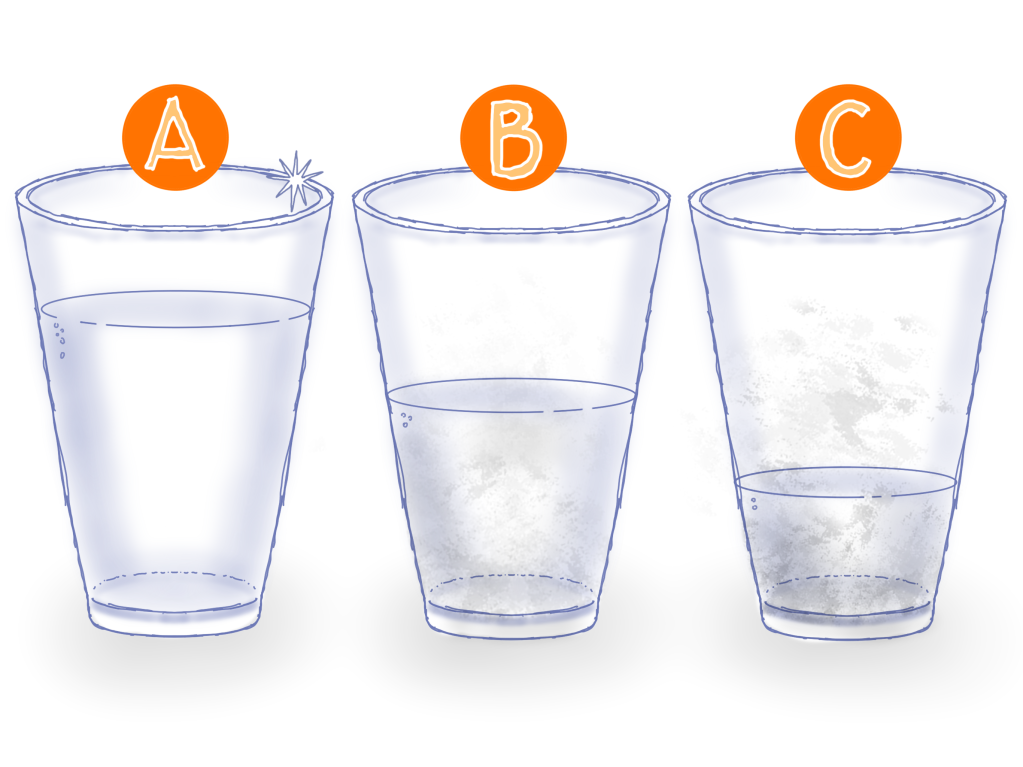
I used to keep a glass of water on my bedside table. I would not drink from it every night, but it was handy when I would wake with a scratch in my throat or a dry mouth. Periodically I would empty and refill it, but I would often use the same glass for months without a proper washing. Gross, right?
Over time, various minerals in the water would attach to the sides of the glass as water evaporated. A few months later, the glass would be covered in an ugly film that would require serious scouring to remove.
If I had thoroughly washed the glass each night, it would have remained sparkling for a very long time.
If I thoroughly wash my brain with deep sleep, my brain has a better chance of remaining sparkling for very long time.
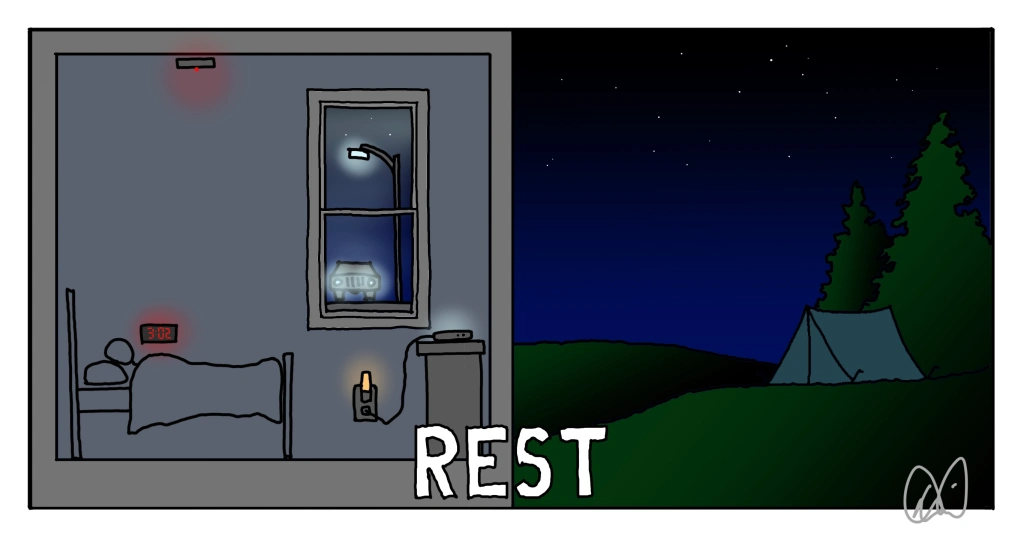
The right light – and beneficial darkness – can help you rest deeply and reap the benefits of all the phases of sleep. The wrong light, especially too much light at night, may be negatively affecting you tonight and every night.
At night, make sure your room is a dark as possible. Worried about stumbling in the darkness? Look for motion-activated nightlights that turn off until needed. Your brain will thank you.
Light can help you wake gently, move with energy, perform brilliantly, relax easily, and rest deeply. But how can you bring these benefits home? As the series progresses, I will dive into overarching strategies for our glare zones, comfort zones, work zones, and safety zones.
You can live a better life.