
Giving the Simple Gift of Light #8
Lighting design is at once quite simple and quite challenging, and the concept of viewing angle is a perfect example of this paradox. Simply put, light travels in a straight line and so does our vision, which makes predicting glare and comfort easy.
Easy, that is, so long as no one moves.
Our viewing angle – the direction our eyes are facing at any given moment – changes constantly, but we also tend to land in generally the same places over and over again. In our living room, I am always on the right side of the couch as seen from the door. In the dining room, I am always in the chair on the end of the table between the northern facing window and the door to the kitchen. In my home office, I always sit facing my computer monitor.
It is important to consider our more common viewing angles when developing a lighting design because light also travels in a straight line. If that line is uninterrupted from the light bulb to our eyes – if we can see a bare light bulb anywhere – then we have glare. If we can see directly into a recessed downlight, we have glare. If we can see the undercabinet light or the shelf lighting, we have glare.
On the flip side, I almost never put my head up by the ceiling and look towards the room. Nor do I lay my head on the countertop or flatten my back against the wall or stand on the table. Those angles are generally okay to introduce light sources, because we will never see them as glare.
The important concept here is to pay attention to how you see light in your space.
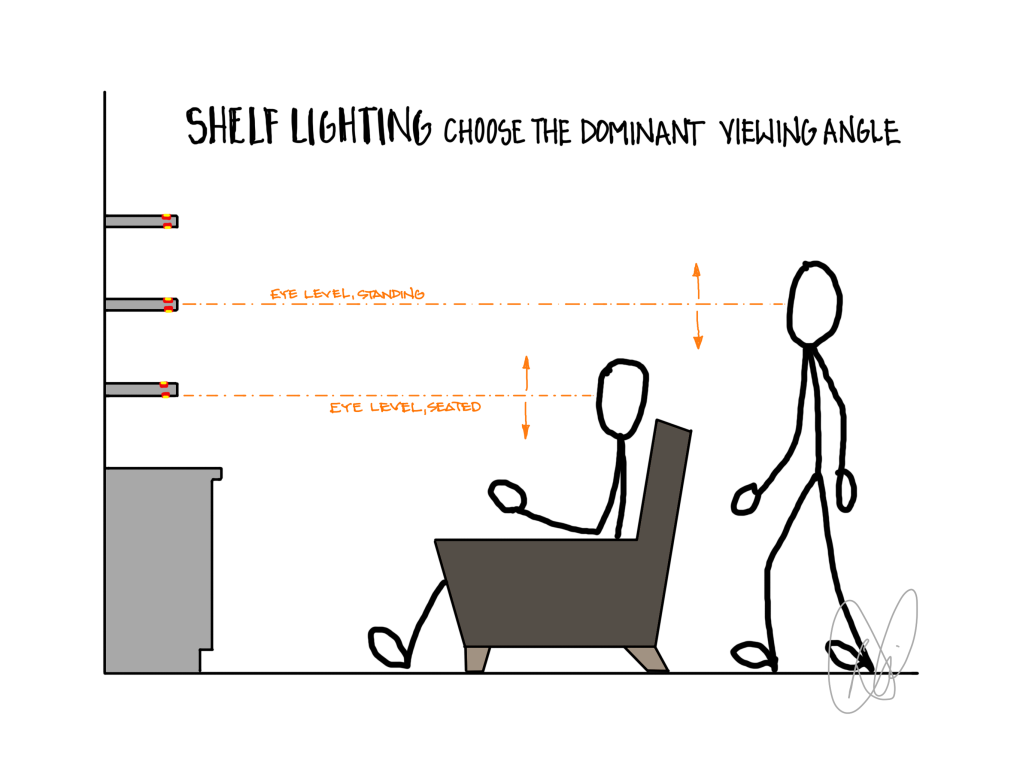
As with nearly every aspect of lighting design, compromises must be made to ensure the most comfort for the most people for most of the time. Take your living room as an example. Do you stand in the room? Probably. Do you move around? Likely. Do you spend most of your time seated on the couch or chair?
We have to choose the most typical eye level so we can minimize glare and maximize comfort for that angle. In the living room illustrated above, I am going to preference the seated position. Sure, I walk into the room, but generally spend less than thirty seconds standing. I can easily spend thirty minutes, or even several hours, sitting on the couch.
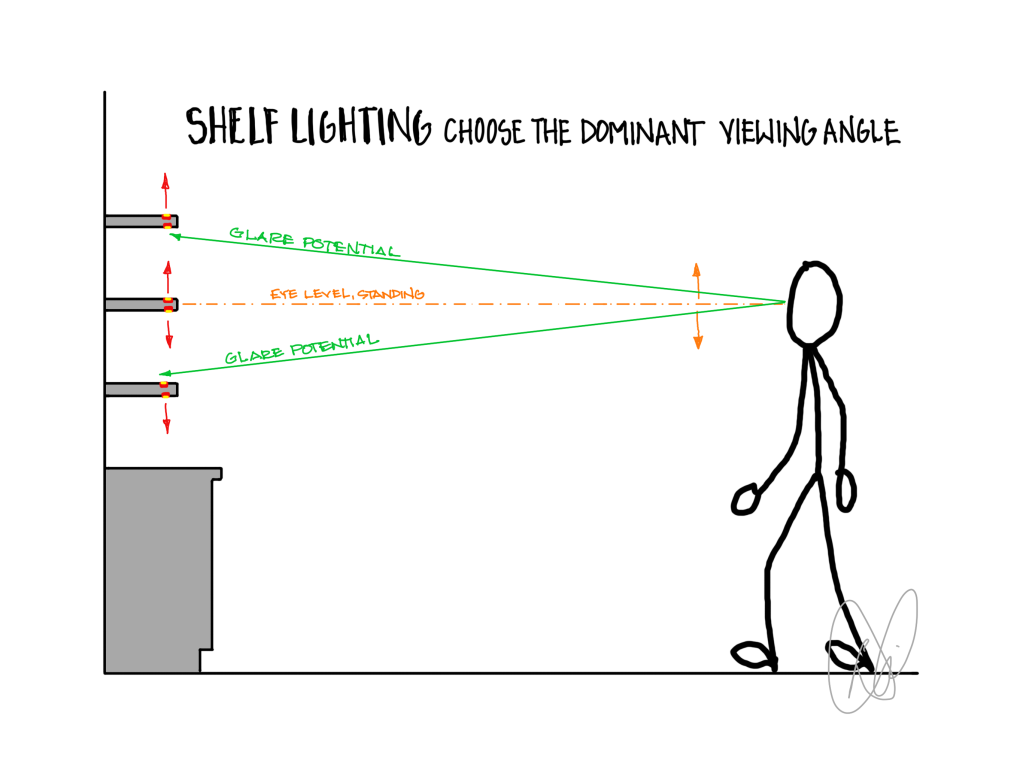
Let me show you why it matters. If I chose standing up as my primary viewing angle, I would recommend illuminating the shelves as illustrated above. Light sources above my viewing angle point upwards; sources below my eye level point downwards. This minimizes glare. See the green lines with Glare Potential labels? If I used the lights at the ends of those lines, I would be able to easily see them. To easily see them is to experience discomfort glare.
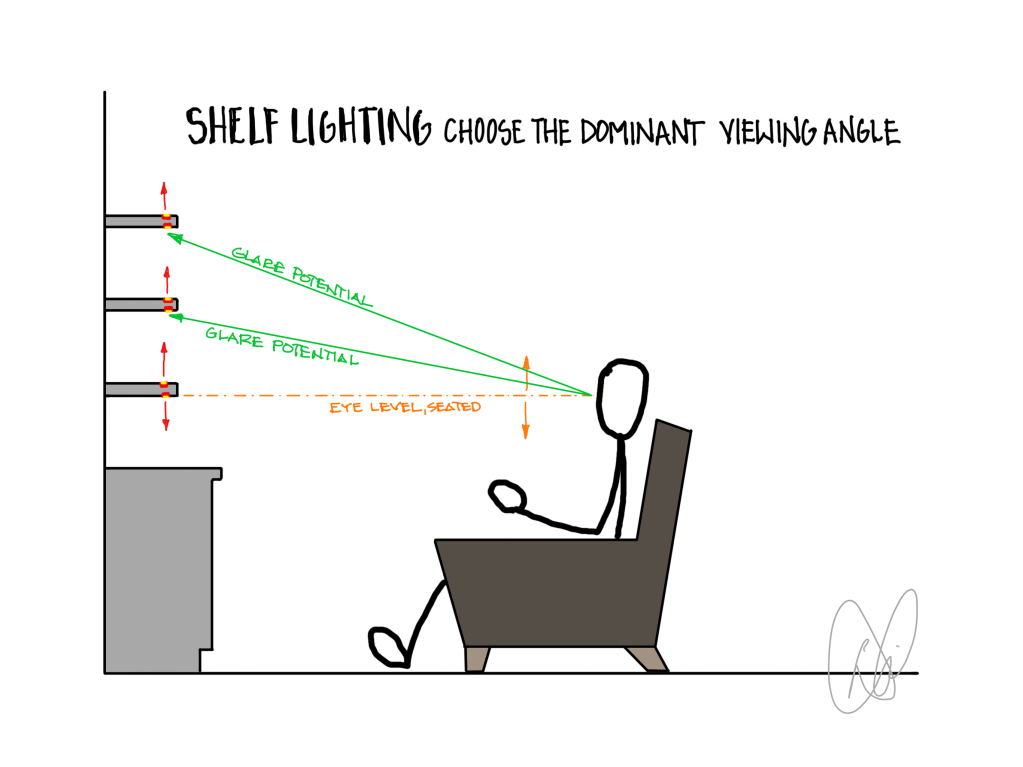
Note how my eye level lowers when seated, which changes the angles of glare potential. The same principles apply: point the light away from your eyes. When seated, however, the middle shelf is lit in a different manner to reduce glare.
In other words, my primary viewing angle or eye level determines where the lighting on the shelves goes. Yet time and time again I see lighting installed in shelves that completely ignores viewing angle, introducing unnecessary glare every time someone sits on the couch.
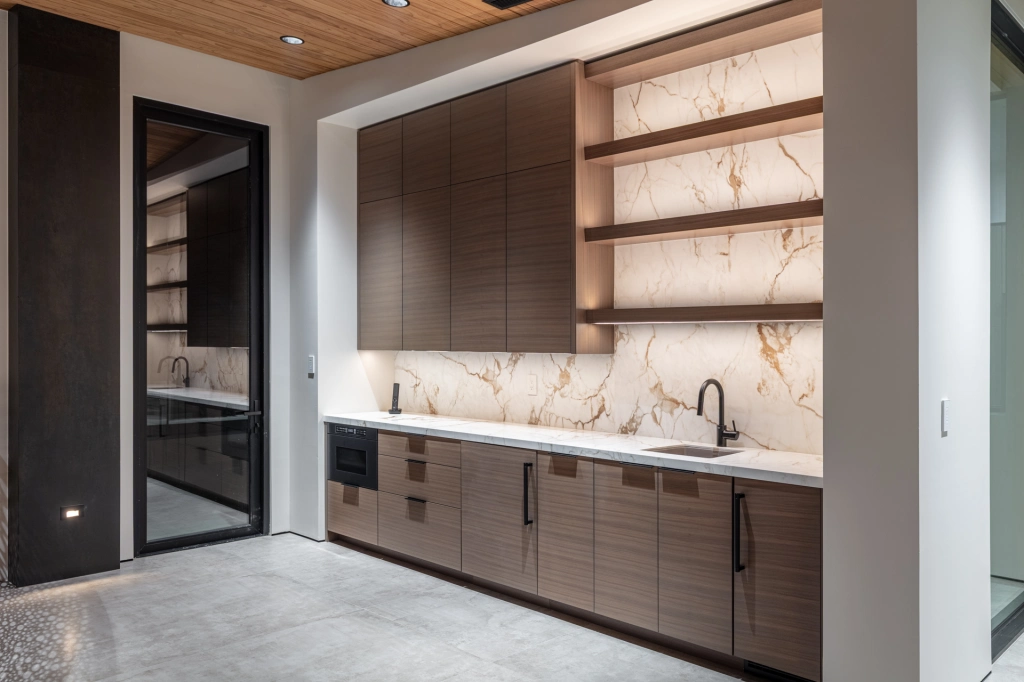
Take a close look at the photograph from one of our recent projects. From this angle, you can clearly see the underside of the top three shelves. If we had placed light sources there, shining downwards to the shelves, there would have been substantial glare.
The bottom shelf does have downward-facing light; it is the only one that does out of necessity. And when standing, this will be quite comfortable.
Shelving is one common area where viewing angle is important to consider; lighting fireplaces and chimneys is another.
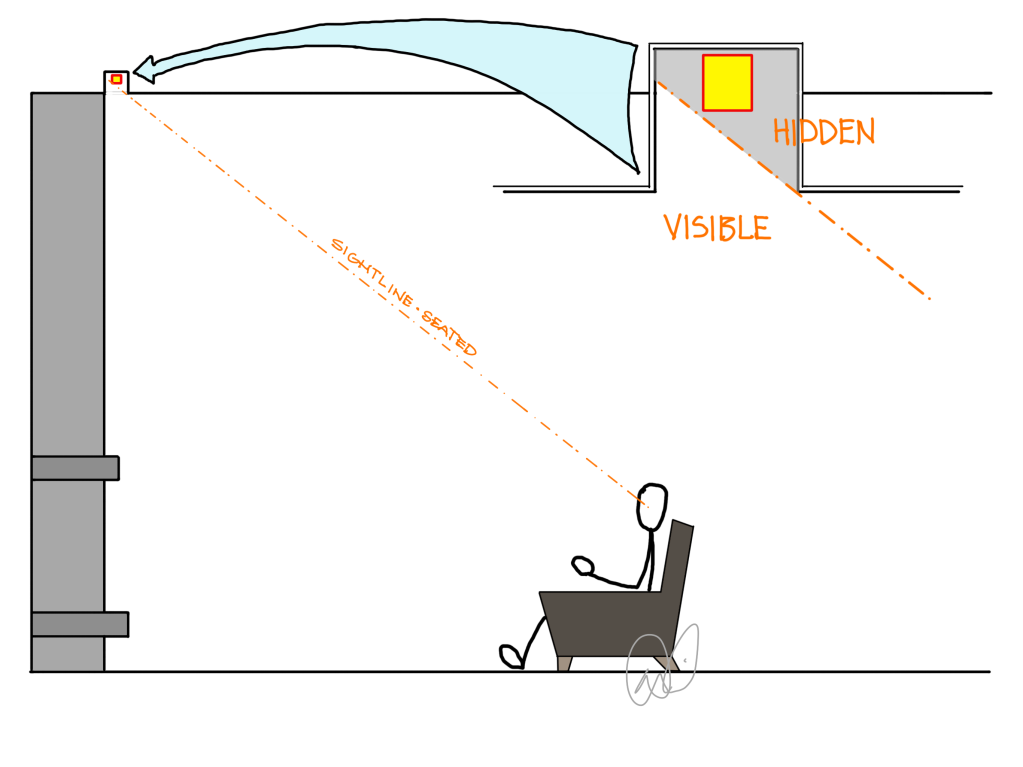
In the illustration above, a slot in the ceiling conceals a linear grazer fixture that casts light down across the face of the fireplace. This is one of my favorite techniques when the fireplace face is textured in some way, whether by plaster, wall coverings, stone, or wood.
Given the placement of the couch in the illustration, the viewing angle or sightline of the seated individual can see into the slot a bit, but the edge blocks direct view of the fixture itself. This is ideal to minimize glare and maximize comfort.
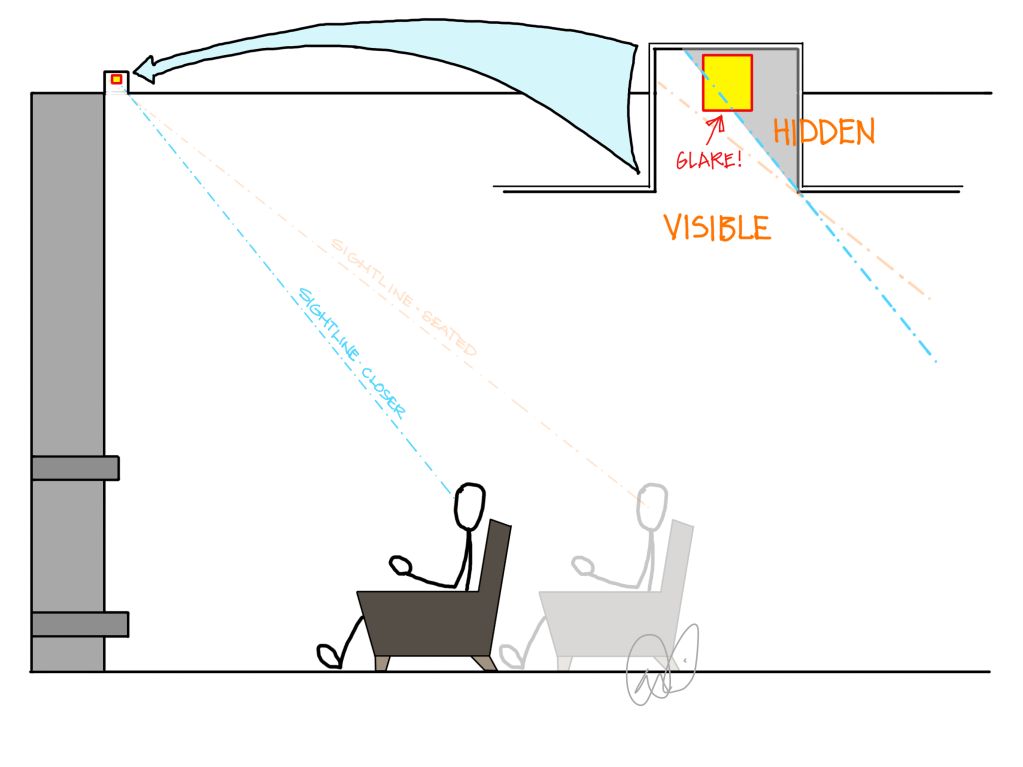
Move the couch closer to the fireplace, however, and the viewing angle changes. Now the sightline can see the fixture itself and the seated individual is likely to experience uncomfortable glare.
That means the slot is no longer adequate to conceal the fixture. In theatrical lighting design, one of my previous careers, we would carefully study sightlines to make sure fixtures were invisible to the seated audience. We should do the same in architecture.
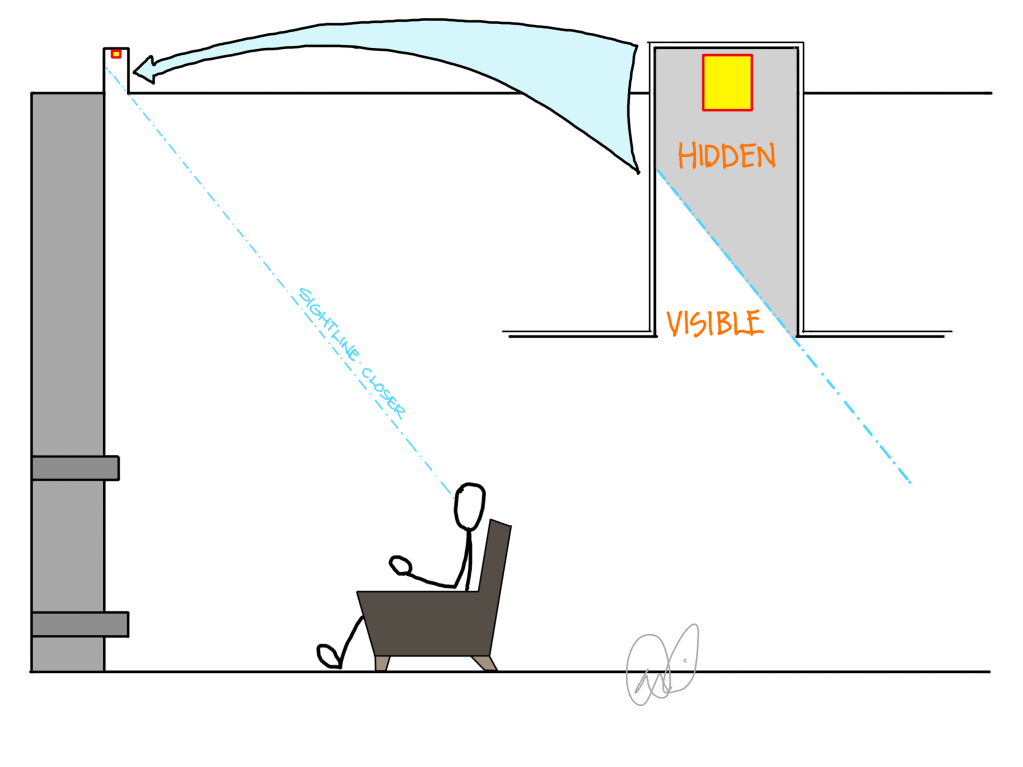
Basic geometry is the only aspect of math that makes intuitive sense to me, so I find this rather easy to do. To fix the problem, we can drag the couch further away from the fireplace – or we can build a deeper slot to conceal the source.
Get the sightline to hit the inside of the slot but miss the fixture and glare disappears.
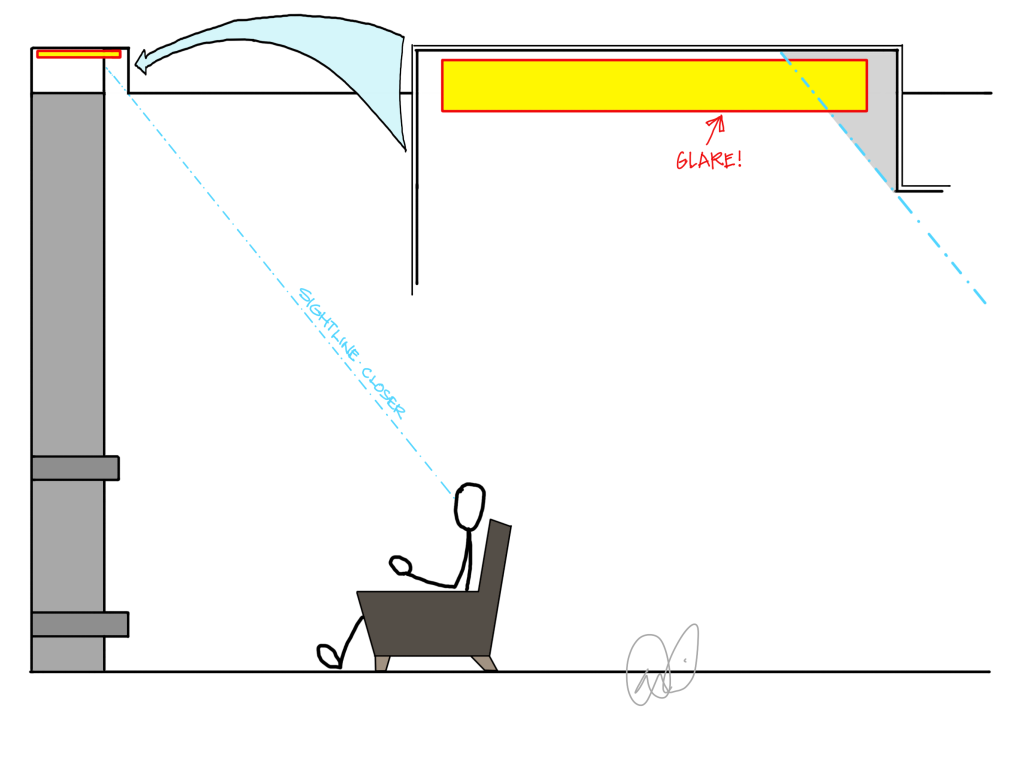
Fireplaces can get a little tricky, especially if you want to “wrap” the sides of the fireplace with the same linear grazing fixtures. The result is something like a very shallow and very wide slot, which makes it very easy for the seated individual to see a lot of the light fixture.
Seeing a lot of the fixture means they will experience a lot of glare. Ugh.
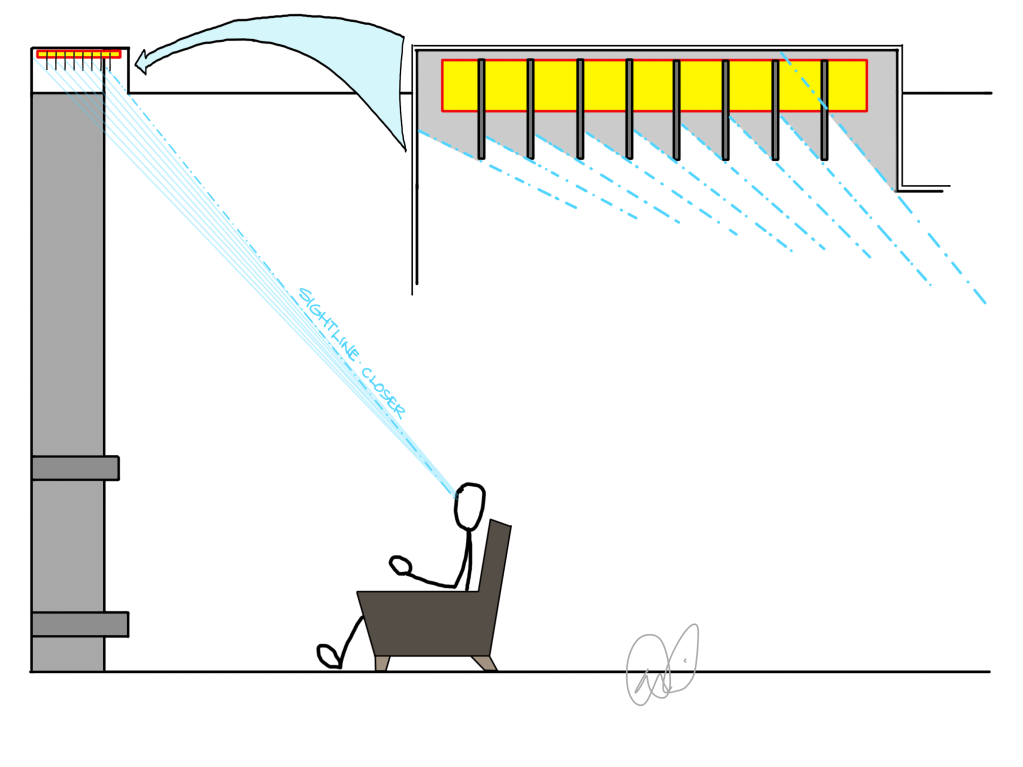
This is where louvers come in handy. A good louver can act as a series of shields that effectively divide one big slot into lots of little slots. Now the geometry protects the viewer from direct glare, restoring comfort. I wish there were more louver options available in linear LED products – you have to look hard for them.
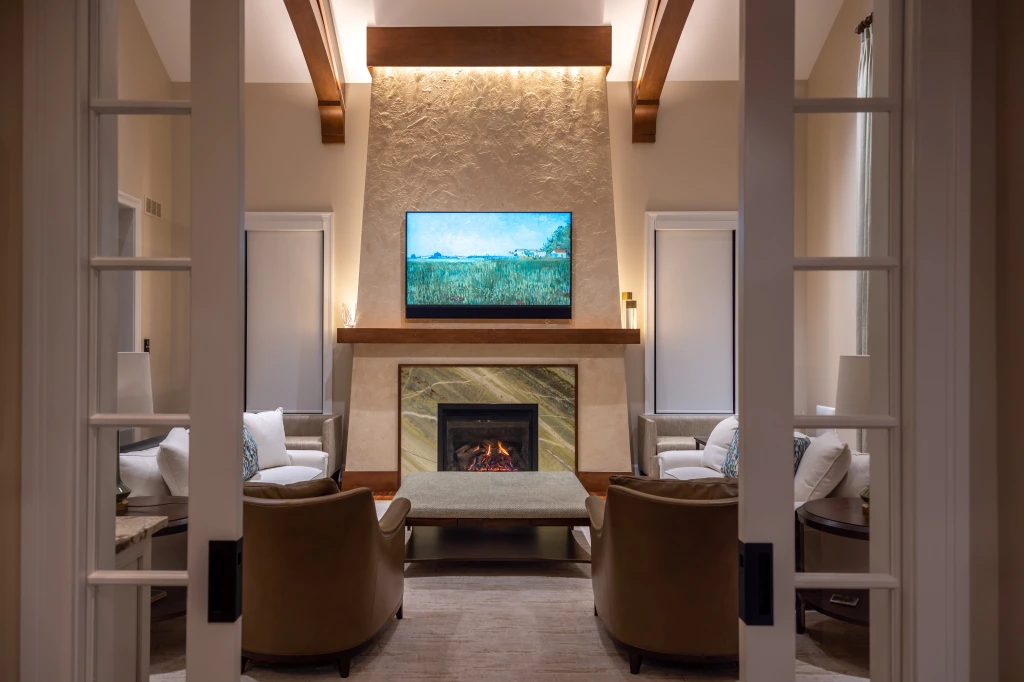
And sometimes you can get a little creative, especially if you are working with a top-tier millwork team and builder. Note the wooden valence at the top of the fireplace that creates a deep pocket, concealing the linear grazer from view. This allows light to leak out and highlight the textured plaster surface, really making it a lovely feature.
I was concerned about glare around the sides and didn’t have access to the right louver setup when designing this project a few years ago, so I came up with another solution: embed the light sources into the mantel and point them upwards. Glare was eliminated, but fireplace still has light on all three visible sides.
Light is predictable, but you may need to do a little geometry to make your spaces more comfortable. Point it away from your sightlines.
Who wants a house with flashlights pointing at your face?