Would you rather invest in expensive electrical equipment or your quality of life?
Recently one of our custom integration partners asked me why homeowners should choose digitally controlled lighting over panelized dimming systems. As a lighting professional, the choice is so clear to me that it can be difficult to imagine why anyone wouldn’t want to go digital, other than potential cost.
But I got to work thinking up ways to convince homeowners that digital isn’t just the better option, it’s the only not-dumb option.
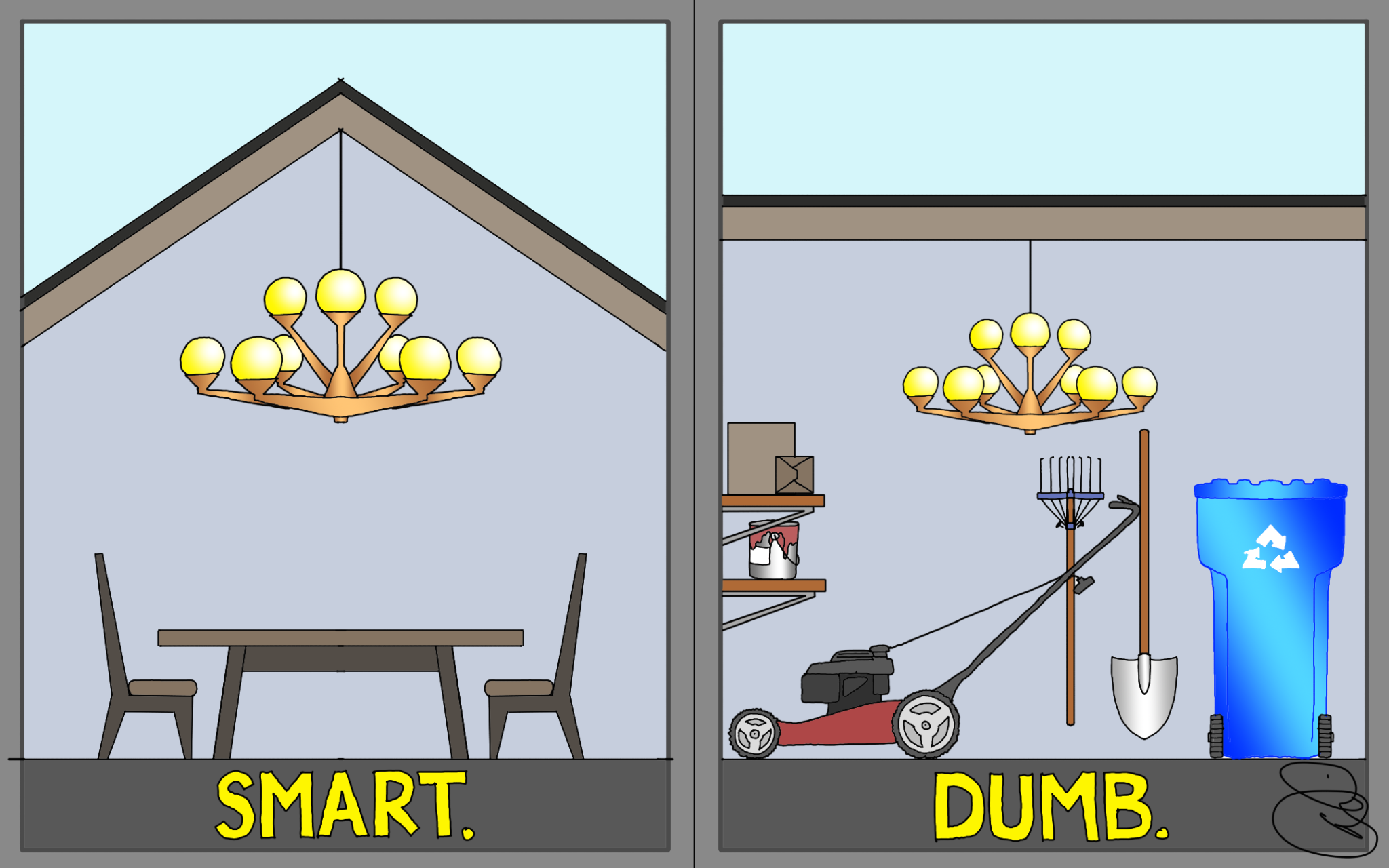
Sometimes, the difference between a smart choice and a dumb choice is easy. You have a beautiful and expensive chandelier. Hang it above the dining room table? Smart. Hang it in the garage, where it will get filthy, where you will bang your head on it every time you grab a broom? Dumb. In a way, panelized dimming is like putting your most expensive lighting in the garage. I’ll explain in a minute.
Closets and mechanical rooms (or garages) become a central part of the discussion when considering digital lighting versus analog panelized dimming. So let’s look at the humble closet, the out-of-the-way storage cubicle where mechanical equipment lives.
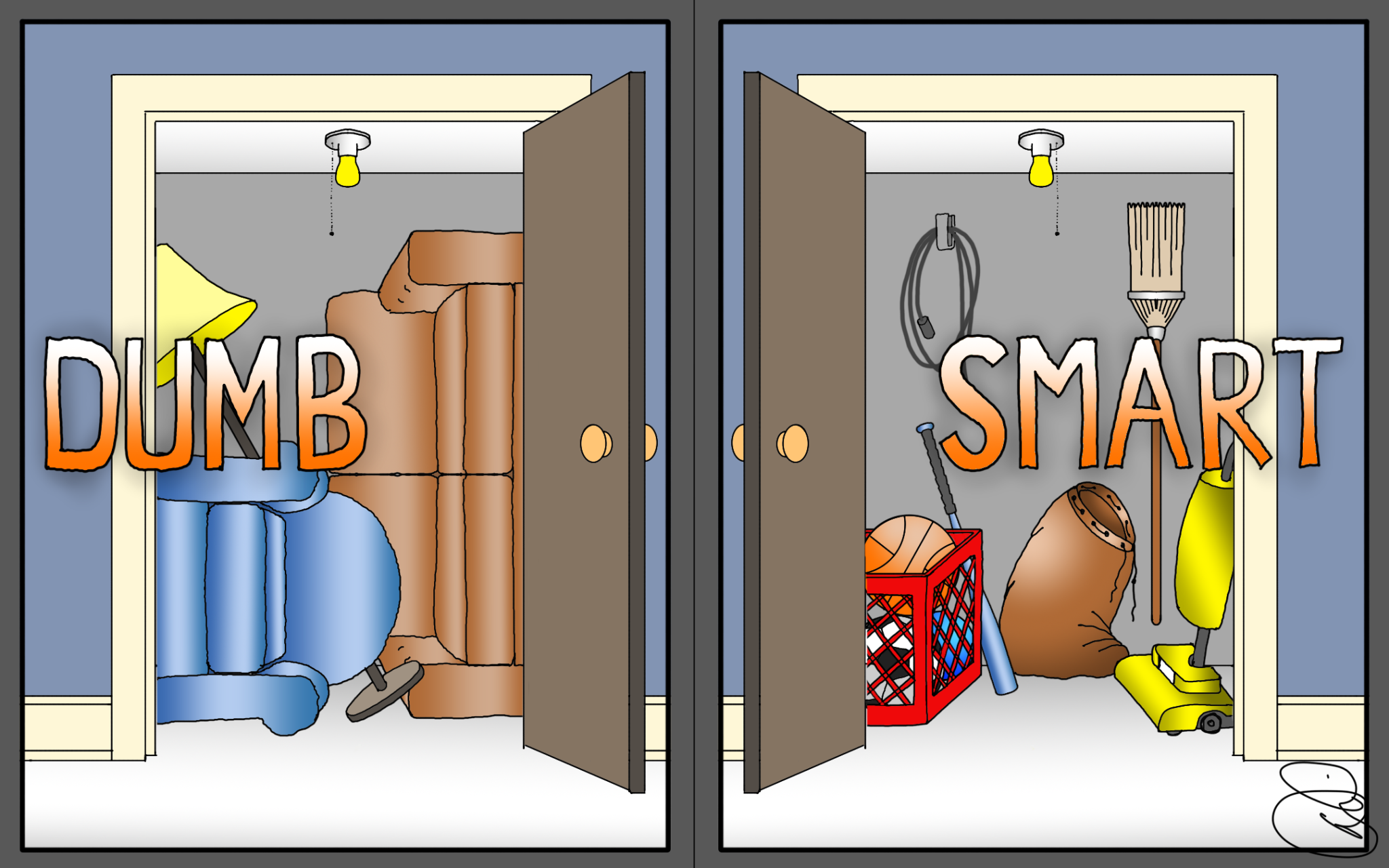
It would be pretty dumb to buy beautiful, functional, comfortable living room furniture and stuff it all in the closet, leaving the room empty. You spent the money to sit comfortably, to relax, but you then pushed all the necessary gear into the closet.
Would it not be smarter to pull the furniture out into the living room, where it serves a daily benefit of increased comfort?
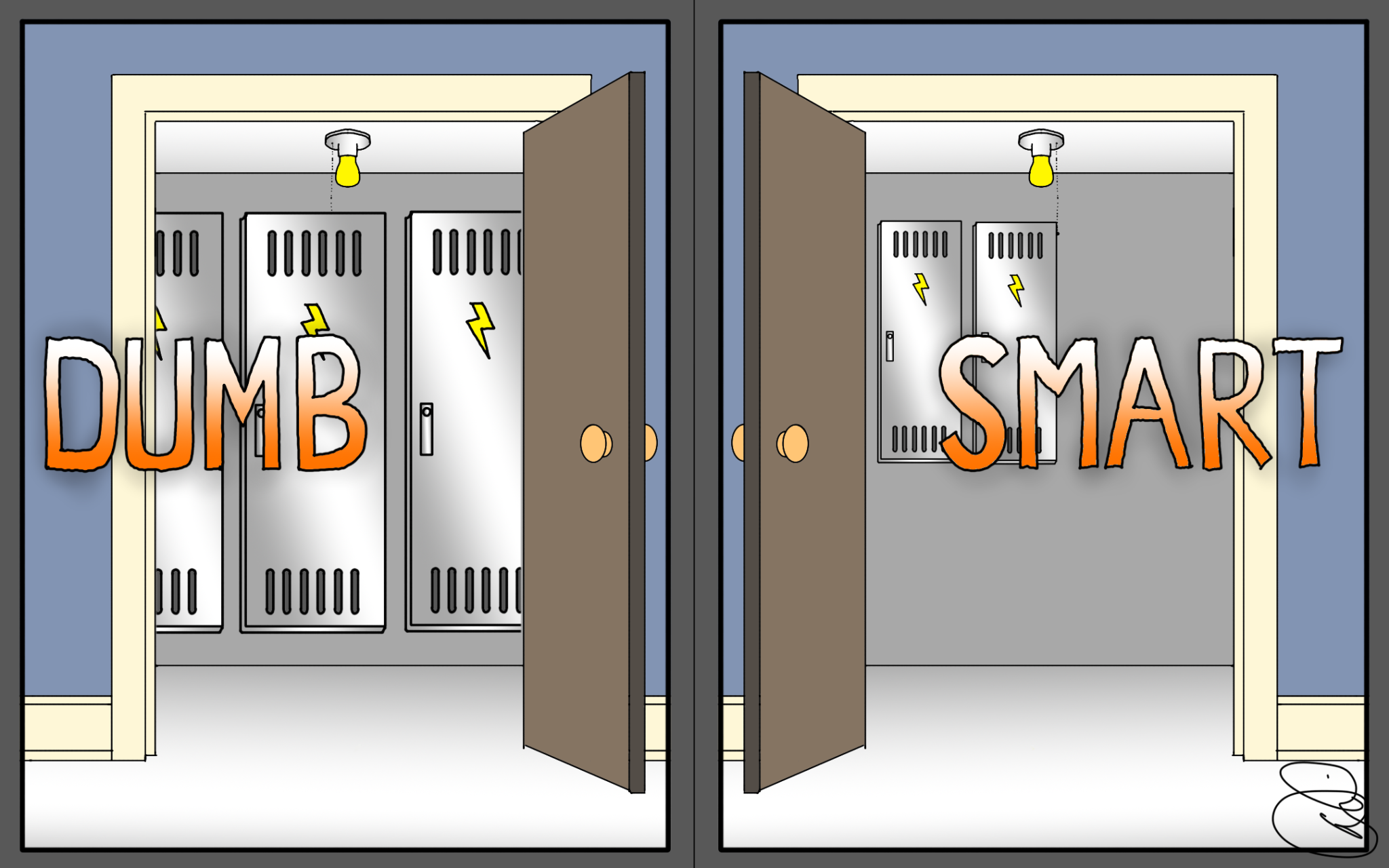
Panelized dimming systems – which I am brazenly calling the “dumb” choice in this post – are in truth pretty nifty. Instead of rows of dimmers and switches on your kitchen wall, each load, or group, of lights is connected back to a dimming panel in a closet or utility room. These dimmers can then be remotely controlled by keypads and even phones and touchscreens.
The end result is the ability to create preset scenes or looks, with all the lights dimmed perfectly, and recall those scenes with the simple press of a button on a beautiful keypad. So why is this possibly a waste of money?
Dimming panels cost a decent deal of money. Think of it as buying some really nice equipment and hiding all of it in your closet. You get some benefit, of course, but there is an awful lot of your money humming away unseen.
Digital systems also allow you to control each group of lights remotely and require some equipment in the closet. But here’s the catch: a fully digital system will require substantially less gear in the closet. This saves space, which can be valuable, but also moves your money out of the closet and into the room.
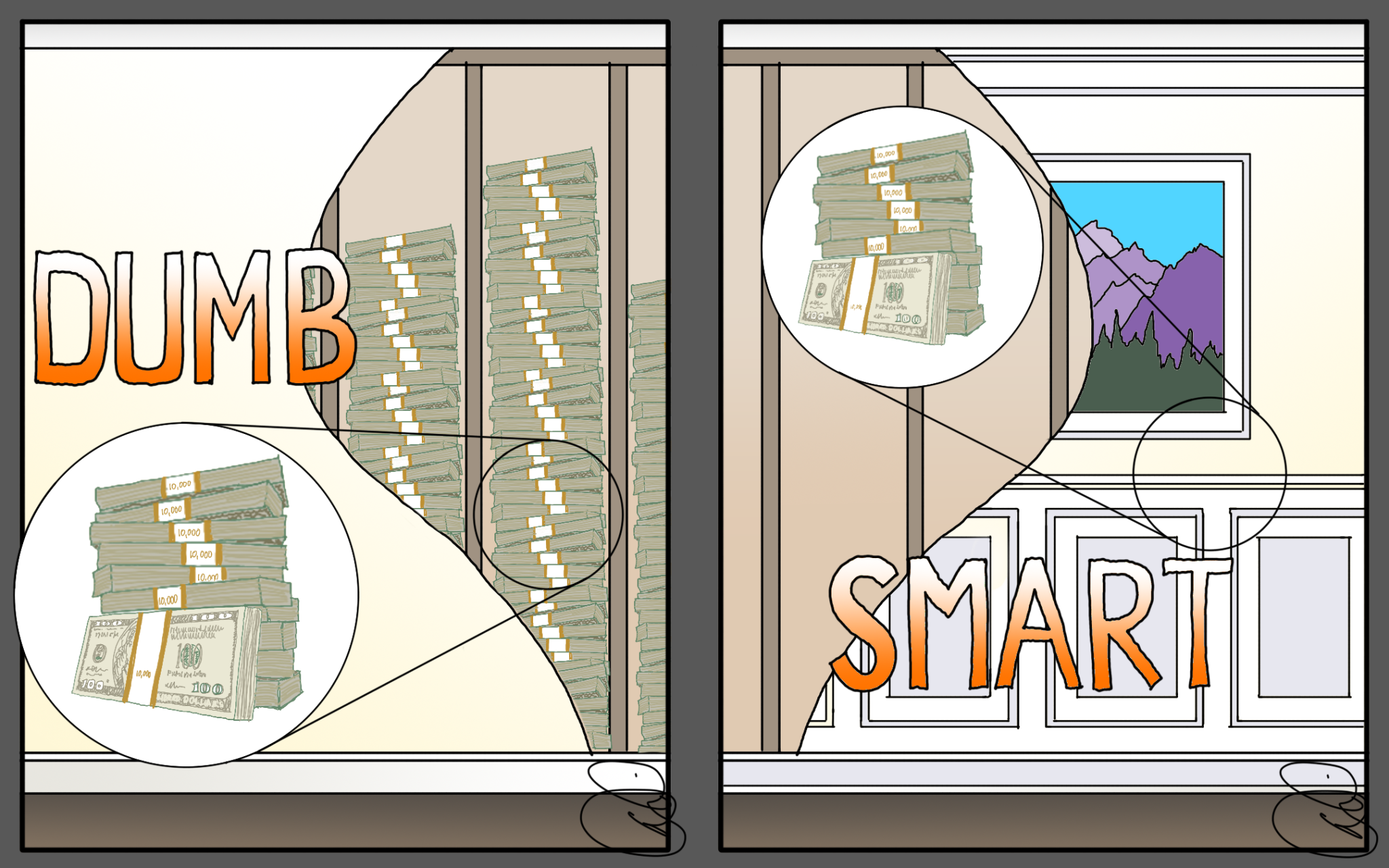
Imagine you have stacks and stacks of cash laying around that you want to use on your new home. You could stack those bills up between the studs and then cover them with sheetrock. Your money would be gone, but any benefit is hidden inside the walls.
Instead, use that money to make your space more beautiful, more comfortable. Buy trim and millwork. Add finishes and better flooring. Buy artwork and furniture. Perhaps you used the same amount of money, but your home is more beautiful, functional, and comfortable.
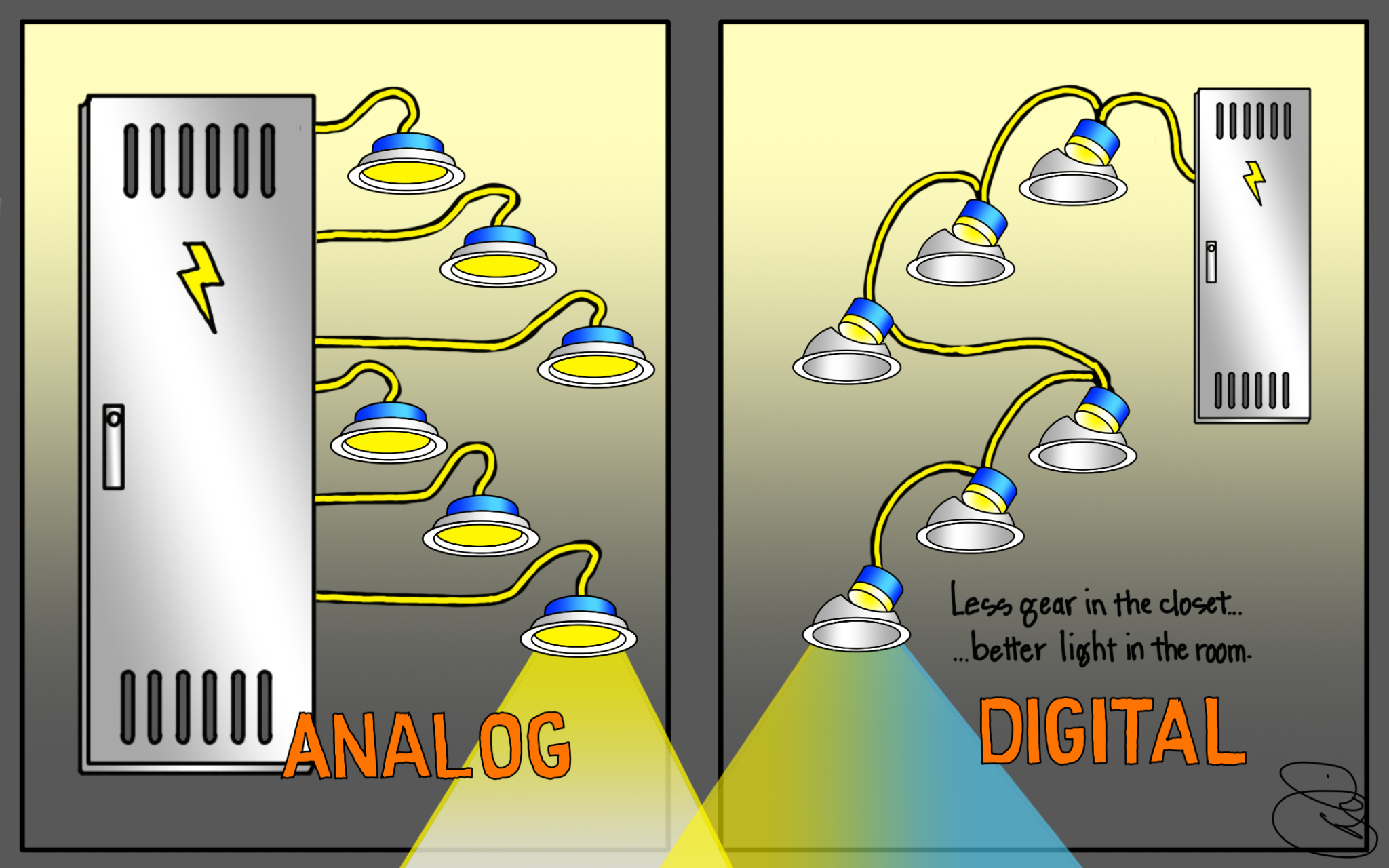
How is that similar to the analog/digital debate? If it were simply a question of putting dollars into dimming cabinets or into fixtures, but the room looked and felt just the same, there might not be a huge advantage to digital systems. Sure, digital systems require less wiring (saving copper, material costs, and labor) and save closet space, but the end result is that the room could look and feel exactly the same. Why bother?
Digital lighting becomes the smart choice when you add one more key benefit to the equation: tunable light fixtures. “Tuning” light is the ability to shift the color temperature of the light source from warm, amber white through neutral white all the way to cool, crisp, blue white. Check out any of my posts on light and health, circadian rhythm, or tunable technology and you will discover a long list of benefits. Homes look and feel better; they also support our natural biorhythms better. Tunable light essentially makes the light inside our homes more like the light outside, more like the gold standard of natural light.
In my opinion, digital lighting makes the most sense when the dollars saved are invested in better, tunable light fixtures. Your investment moves out of the walls, out of the closets, and into the rooms you inhabit on a daily basis. You get the same benefits as the analog panelized dimming systems, but you also gain the ability to better tailor your light throughout the day.
I experimented with tunable lighting and digital control in my bedroom a few years ago. I have a keypad on the wall as you enter, one that allows me to turn the lights on and off and shift the color temperature from sunrise warm to midday sun. I have four different kinds of tunable fixtures in the room, all controlled by the single keypad.
The end result is light that can be crisp and bright and energizing during the day and soft, warm, and relaxing at night. And how much money did I shove into the closet for dimming panels? Zero dollars. All of the investment went to improving my quality of life.
That makes digital lighting a pretty smart choice, yes?